Home, moving & space
Laundry Closet Ventilation and Clearance Explained
The clearances in a washer and dryer manual aren’t padding. Each one is there for air, for connections, or for getting the appliance in and out — and in a closet, the door can matter as much as the walls. This guide explains what each clearance does, why closet doors often need openings, and why a closet that fits the units still needs checking.
Ready to try the tool this guide describes?
What each clearance is for
| Clearance | What it’s for |
|---|---|
| Sides and between | Air around the cabinets, room to slide them in and out, and keeping vibration from rattling walls |
| Rear | Water and drain hoses, the power cord or gas line, and the dryer’s vent elbow without crushing it |
| Top | Air, and room to lift a top-loader’s lid or reach a stacked dryer |
| To a closed door | Air reaching the dryer, and a door that shuts without touching the fronts |
Why closet doors often need openings
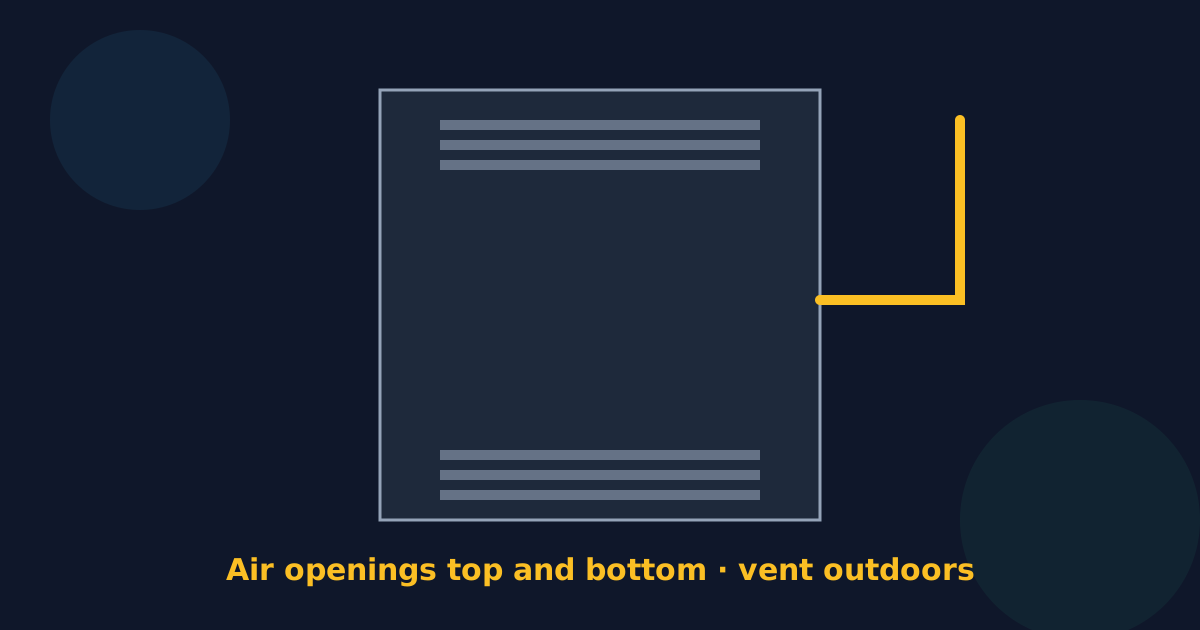
A dryer pulls in room air and pushes it out through the vent. Shut it in a closet with a solid door and it is short of air, which slows drying and makes it run hot. That is why many manuals require a louvered door, or openings near the top and bottom of the door, with a minimum total open area.
The area varies by maker and model. Samsung, for example, lists two openings totaling at least 72 square inches for its closet installations, and some manuals say a dryer must not go behind a lockable or sliding door. Use the figures in your own manual, not a number from another brand.
Dryer venting basics
- Vent a dryer outdoors — never into the closet, an attic, or a crawl space.
- Use the duct type the manual calls for; many require rigid or semi-rigid metal.
- The maximum vent length shrinks with every elbow; manuals give a table.
- Leave enough rear clearance that the transition duct isn’t kinked or flattened.
- Gas dryers have their own requirements for the gas connection and air supply.
Fitting is not the same as compliant
A closet can hold the appliances and every clearance you entered and still not be a proper installation, if the vent run is too long, the door has no openings, or the outlets and valves are blocked. The Washer/Dryer Closet Clearance Calculator checks only the space; your manuals, local building codes, and any landlord or condo rules decide the rest.
Where to find your numbers
- The installation instructions that came with each appliance.
- The model’s dimension or specification sheet on the maker’s website.
- A label inside the door or on the back panel with the model number to look up.
- The maker’s support line, if the manual doesn’t cover closet installs.
Closet Ventilation & Clearance FAQ
- Does a dryer in a closet need a vented door?
- Often, yes. Many manuals require louvered doors or openings at the top and bottom with a minimum total area; check yours, because the figure varies by model.
- How much space does a dryer vent need behind it?
- Several inches, so the vent elbow and transition duct aren’t crushed. Manuals commonly ask for about 4–6 in at the rear; follow your model’s figure.
- Can I vent a dryer into the laundry closet?
- No. Dryers should vent outdoors. Venting into the closet or attic adds lint and moisture where they don’t belong.
- If my closet passes the calculator, is it up to code?
- Not necessarily. The calculator checks dimensions only; venting, ventilation openings, utilities, and local codes are separate.
- Why do clearances differ between brands?
- Each maker tests its own appliances and writes its own installation requirements, so side, rear, top, and door figures differ. Always use the manual for your models.
Related guides
- Measuring a Laundry ClosetWhere to measure a laundry closet’s width, depth, and height, how to read appliance sizes, and how the clearances from the manual add up.
- Stacked vs Side by SideHow much width, height, and depth a washer and dryer need stacked or side by side, with the same pair compared, and when stacking is possible.
Open the tool
Jump into Washer/Dryer Closet Clearance Calculator when you are ready to process your files.