Home, moving & space
Stacked vs Side-by-Side Washer and Dryer: Space Compared
Stacking a washer and dryer trades width for height: the pair that needs most of a 5 ft closet side by side can fit a closet half as wide, if the ceiling is high enough and the models are made to stack. This guide compares the two layouts with the same appliances and covers when stacking is an option at all.
Ready to try the tool this guide describes?
How each layout uses the closet
| Layout | Width needed | Height needed | Depth needed |
|---|---|---|---|
| Side by side | side + washer + between + dryer + side | taller unit + top | deeper unit + rear |
| Stacked | wider unit + 2 × side | washer + stacking kit + dryer + top | deeper unit + rear |
Depth is the same either way; only width and height change.
The same pair, two layouts
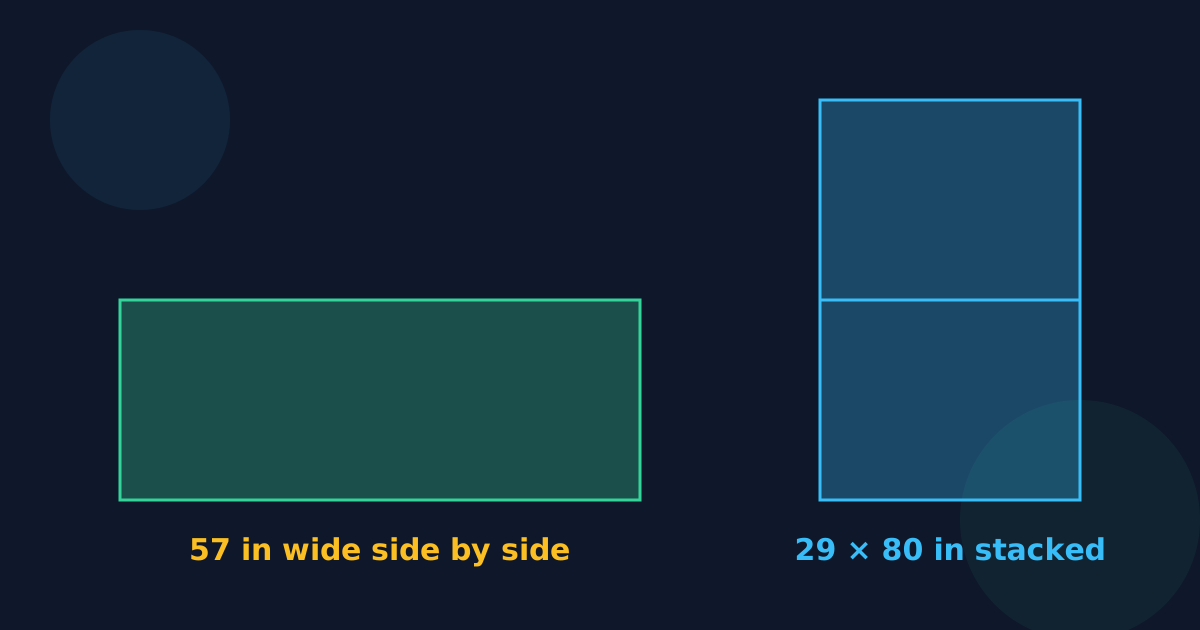
Two units each 27 in wide, 30 in deep, and 39 in high, with 1 in at the sides, 1 in between, 1 in above, and 5 in behind, need 57 in of width and 40 in of height side by side. Stacked on a 1 in kit, they need 29 in of width and 80 in of height. Both layouts need 35 in of depth.
So a 30 in wide closet can take the stacked pair if it is at least 80 in high and 35 in deep — but a 34 in deep closet would not, whichever way they go.
When stacking is possible
- Most stackable pairs are front-loading washers with a matching dryer; a dryer generally can’t go on a top-loading washer.
- The manufacturer has to approve the pair for stacking, and it usually needs that maker’s stacking kit.
- The kit adds a little height between the units; its instructions give the figure.
- Some one-piece laundry centers combine both in one cabinet; compare their overall size directly.
Trade-offs beyond the numbers
- Stacked controls and the dryer’s lint filter sit high, which can be hard to reach.
- Side by side leaves a top surface for folding, unless a shelf goes over it.
- Service can be harder stacked; some repairs mean separating the units.
- A stacked pair is tall and top-heavy to move in; check the doorways and corners on the way.
Stacked vs Side by Side FAQ
- How wide a closet do I need for a stacked washer and dryer?
- The wider unit plus a clearance each side. Two 27 in units with 1 in each side need 29 in, before any trim or door narrowing at the opening.
- How tall a closet do I need to stack them?
- Both heights, plus the stacking kit, plus the top clearance. Two 39 in units on a 1 in kit with 1 in above need 80 in.
- Does stacking change the depth I need?
- No. Depth is the deeper unit plus the rear clearance in both layouts — 30 in units with 5 in behind need 35 in either way.
- Can I stack any washer and dryer?
- No. Only pairs the manufacturer approves for stacking, usually with its own kit. A dryer generally can’t be stacked on a top-loading washer.
- Is side by side or stacked better?
- It depends on the closet. Stacking suits narrow, tall spaces; side by side keeps controls in reach and leaves a surface on top. The depth needed is the same.
Related guides
- Measuring a Laundry ClosetWhere to measure a laundry closet’s width, depth, and height, how to read appliance sizes, and how the clearances from the manual add up.
- Closet Ventilation & ClearanceWhat each washer and dryer closet clearance is for, why many closet doors need air openings, the venting basics, and why fitting isn’t the same as compliant.
Open the tool
Jump into Washer/Dryer Closet Clearance Calculator when you are ready to process your files.