Work, pay & shifts
Real Estate Commission Splits Explained
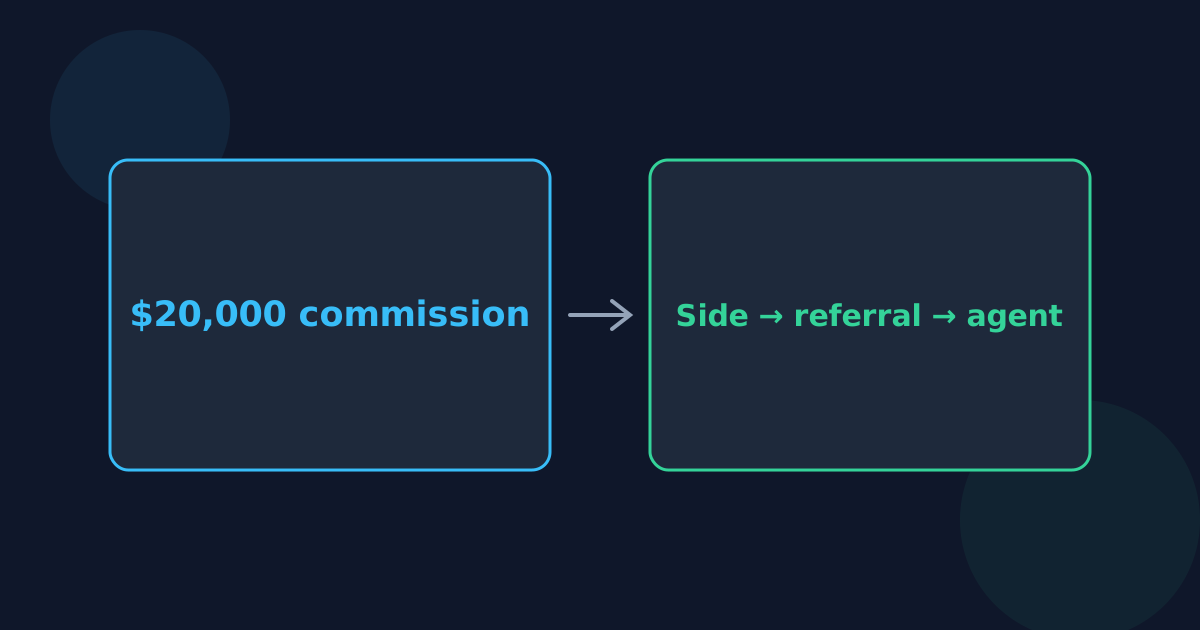
A real estate commission is rarely split once. It typically passes through several hands — between brokerages, to a referral partner, between a brokerage and its agent, sometimes across a team — and each step is its own split with its own agreement. Commission amounts and how they are shared are negotiable and have changed in recent years, so the figures below are an illustration, not typical rates. This guide follows one commission through each stage.
Ready to try the tool this guide describes?
The stages of a split
- The total commission is set by the agreements for the sale.
- It may be divided between the brokerages representing each side.
- A referral fee may come off the top of one side.
- Each brokerage splits its share with its agent — for example 70% to the agent and 30% to the brokerage.
- A team may split the agent’s share again, and fees or caps may apply.
A worked example
A hypothetical $400,000 sale with a $20,000 total commission, followed down one side:
| Stage | Split | Amount |
|---|---|---|
| Total commission | — | $20,000.00 |
| This brokerage’s side | 50% | $10,000.00 |
| Referral fee off the top | 25% of the side | $2,500.00 |
| Left to split | — | $7,500.00 |
| Agent | 70% | $5,250.00 |
| Brokerage | 30% | $2,250.00 |
Each stage starts from the previous stage’s result. In the Commission Split Calculator, run one split per stage.
Why the order of stages matters
If the 25% referral fee comes off the top, the referral partner receives $2,500 and the agent and brokerage share the cost. If instead the agent pays the referral out of their own 70% share, the brokerage keeps $3,000, the agent’s $7,000 becomes $5,250, and the referral partner receives only $1,750 — 25% of a smaller amount. The same percentages produce different payouts, so the agreement needs to say which comes first.
Caps, flat fees, and team splits
- A cap model lets an agent pay the brokerage its percentage only until a yearly cap is reached, after which the agent keeps everything except any per-deal fees.
- A flat-fee model replaces the percentage with a fixed charge per transaction — a fixed-amount split.
- Team splits divide the agent’s share again, often with different splits for leads the team supplied and leads the agent found.
Checking a settlement or commission statement
- Start from the commission shown on the closing or settlement statement.
- Confirm each stage’s base: the whole commission, one side, or what’s left after a fee.
- Recompute each split and round each stage to the cent.
- Make sure every stage’s parts add back up to the amount it started from.
Real Estate Splits FAQ
- Is real estate commission a fixed percentage?
- No. Commission is negotiable, and how buyer and seller representation is paid has changed in recent years. Use the amounts in your own agreements.
- What does a 70/30 split mean?
- The agent keeps 70% of the commission their brokerage receives for the deal, and the brokerage keeps 30%.
- Do I round at every stage?
- Yes — each payout is a real payment in cents. Rounding each stage so its parts add up exactly keeps the whole chain reconciled.
- What is a referral fee?
- A payment to another agent or brokerage for sending a client, usually a percentage of the receiving side’s commission and often taken off the top.
- How does a team split differ from a brokerage split?
- A brokerage split divides commission between a brokerage and its agent; a team split then divides the agent’s share among team members, often depending on who generated the lead.
Related guides
- Splitting a CommissionSplit a commission by percentages, weights, or fixed amounts — with a $10,000 three-way example, what to do when percentages don’t total 100%, and the order fees and splits should come in.
- Rounding SplitsWhy rounded commission shares can add up to a cent more or less than the total, how the largest-remainder method fixes it, and other rounding rules you may see on statements.
Open the tool
Jump into Commission Split Calculator when you are ready to process your files.