Work, pay & shifts
How to Read Decimal Hours on a Pay Stub
Pay stubs show hours as decimals — 38.75, 41.6, 79.83 — because payroll multiplies them by a rate. To compare them with your own record of when you worked, you need them back in hours and minutes. This guide converts typical stub figures, sets out a quick check against your own log, and lists the usual reasons the two don’t match.
Ready to try the tool this guide describes?
From the stub back to the clock
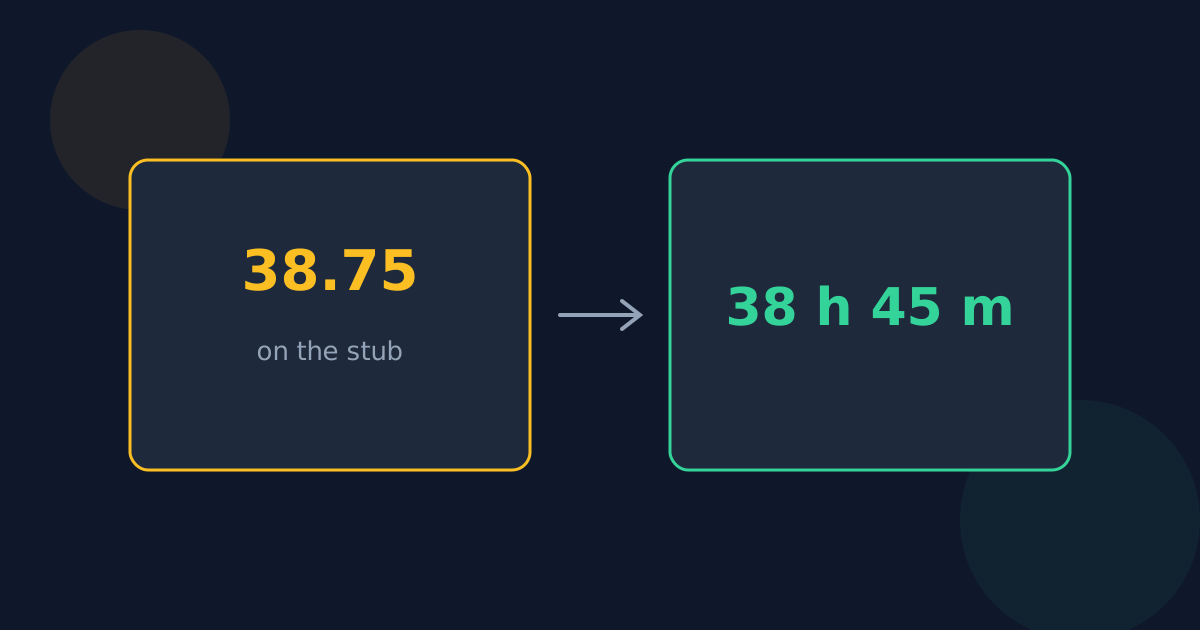
Keep the whole number as hours and multiply the decimal part by 60 for the minutes. 38.75 hours is 38 hours and 0.75 × 60 = 45 minutes. 41.6 hours is 41 hours 36 minutes — the .6 is 36 minutes, not 60.
Typical stub figures
| On the stub | Hours and minutes | h:mm |
|---|---|---|
| 38.75 | 38 hours 45 minutes | 38:45 |
| 40.25 | 40 hours 15 minutes | 40:15 |
| 41.6 | 41 hours 36 minutes | 41:36 |
| 37.92 | ≈ 37 hours 55 minutes | 37:55 |
| 79.83 | ≈ 79 hours 50 minutes | 79:50 |
Checking against your own log
- Add up your own hours for the same dates, in hours and minutes.
- Convert the stub’s hours to hours and minutes.
- Compare them. A difference of a minute or so per day usually comes from rounding; anything larger is worth asking about.
Why the numbers might not match
- The pay period’s dates don’t line up with the week you counted.
- Breaks were deducted automatically, or not deducted when you expected them to be.
- Clock punches were rounded, for example to the nearest quarter hour.
- A 2-place decimal like 37.92 is itself rounded: it stands for anything from about 37 hours 54.9 minutes to 37 hours 55.5 minutes.
Hours split across several lines
Stubs often list hours on more than one line — regular hours, overtime, and premiums such as a night differential. Regular and overtime lines are usually separate hours, but premium lines often repeat hours already counted under regular pay, because the premium is paid on top. Check what each line represents before adding them together.
Decimal Hours on a Pay Stub FAQ
- What does 41.6 hours on a pay stub mean?
- 41 hours 36 minutes: 0.6 × 60 = 36.
- Why are the hours on my stub different from my timesheet?
- Common reasons are different period dates, automatic break deductions, rounded punches, and 2-place rounding of the decimal itself.
- Should I add premium hours to my regular hours?
- Usually not: premium lines often repeat hours already paid as regular time, with the premium added on top. Check your stub’s line descriptions.
- What is 79.83 hours in hours and minutes?
- About 79 hours 50 minutes: 0.83 × 60 = 49.8 minutes, which rounds to 50.
- Why does my pay stub use decimals instead of minutes?
- Decimals can be multiplied directly by an hourly rate; hours and minutes can’t.
Related guides
Open the tool
Jump into Decimal Hours to Hours & Minutes Converter when you are ready to process your files.