Work, pay & shifts
How to Find Your Biweekly Paycheck Dates
Biweekly paydays are the easiest pay schedule to predict, because nothing about the calendar changes them: every payday is exactly 14 days after the last, on the same weekday. All you need is one date you know was a payday. This guide shows how to count forward (or back) from it by hand, what to watch for at month and year ends, and how to sanity-check the result.
Ready to try the tool this guide describes?
Start from one payday you can trust
The date printed on a pay stub or a bank deposit is the most reliable starting point. Use the pay date, not the end of the pay period — the period usually closes several days earlier. It doesn’t matter how old the date is, as long as your employer hasn’t changed the schedule since.
Count in 14-day steps
Add 14 days to get the next payday, and keep going. Because 14 days is exactly two weeks, the weekday never changes. Starting from Friday, January 2, 2026:
| Payday | Date |
|---|---|
| 1 | Friday, January 2, 2026 |
| 2 | Friday, January 16, 2026 |
| 3 | Friday, January 30, 2026 |
| 4 | Friday, February 13, 2026 |
| 5 | Friday, February 27, 2026 |
| 6 | Friday, March 13, 2026 |
Jumping ahead without listing every date
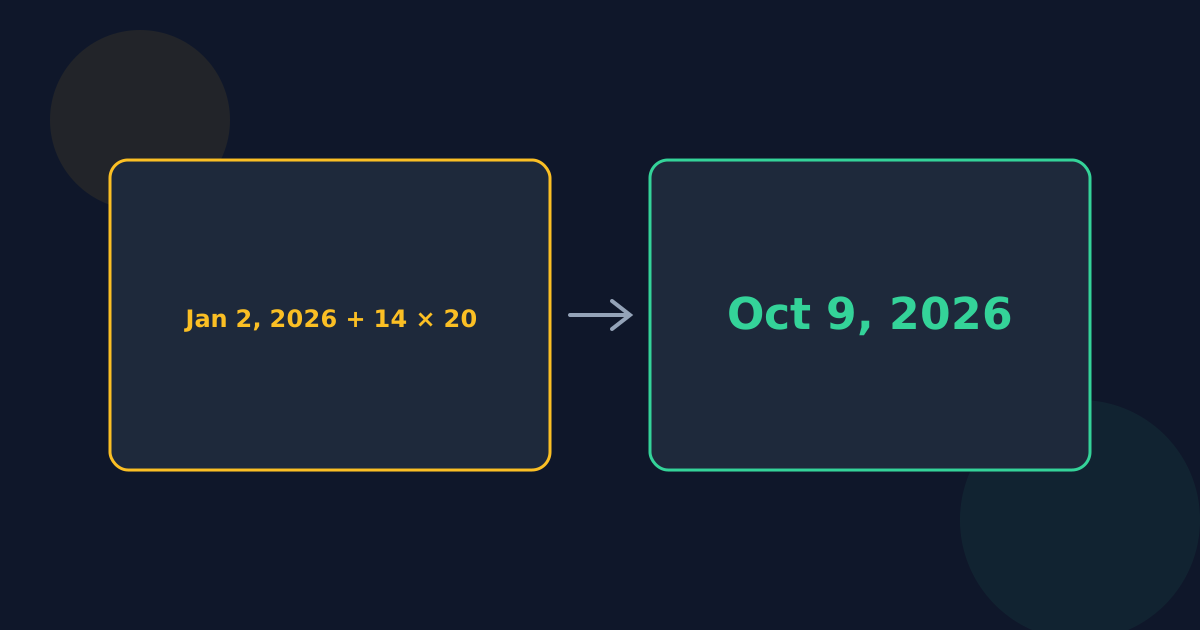
To find the next payday after a date far from the one you know, count the days between them, divide by 14, and round up. From January 2 to October 8, 2026 is 279 days; 279 ÷ 14 is 19.9, which rounds up to 20, and 20 × 14 = 280 days after January 2 is Friday, October 9, 2026.
The same works backward. If the payday you know is in the future, count back in whole 14-day steps until you reach the first payday on or after today.
Month ends, year ends, and leap days
- A 14-day step crosses into the next month or year without any adjustment: Friday, December 17, 2027 is followed by Friday, December 31, 2027 and then Friday, January 14, 2028.
- February 29 is just another day in the count. From Friday, February 18, 2028 the next payday is Friday, March 3, 2028 — 14 days later, with the leap day included.
- Spreadsheet date arithmetic works the same way: add 14 to a date cell. Counting by months, or by eye on a printed calendar, is where mistakes creep in.
Checking the list
- Every date should be the same weekday. If one isn’t, a step was miscounted.
- Most years have 26 paydays; a year with 27 is normal, not an error.
- Holidays aren’t built into the count. If a payday lands on a bank holiday, your employer may pay a day early or late, but the following paydays normally stay on the 14-day rhythm.
Finding Biweekly Paydays FAQ
- Should I use the pay date or the pay period end date?
- The pay date. The period end is usually a few days earlier and would put every date in the list on the wrong day.
- Does every biweekly payday fall on a Friday?
- No. Fridays are common, but any weekday works; whatever weekday your known payday is, every payday on the schedule is the same one.
- What if my employer changed the payday?
- Start counting from a payday after the change. Dates before the change follow the old rhythm.
- Can I count backward to find past paydays?
- Yes — subtract 14 days instead of adding. That helps when matching old deposits or rebuilding a year of pay stubs.
- How do I list biweekly paydays in a spreadsheet?
- Put the known payday in one cell, add 14 to it in the cell below, and fill down. Each cell is the payday after the one above it.
Related guides
- Three-Paycheck MonthsWhy two months a year get a third biweekly paycheck, how to find them for your payday, and how to budget around the extra check.
- 27-Payday YearsThe calendar rule behind 27-paycheck years, how often they come around, and how to tell in advance whether next year has one on your schedule.
Open the tool
Jump into Biweekly Paycheck Date Calculator when you are ready to process your files.