File & Data
How to Split a CSV Without Uploading It
Many online CSV splitters ask you to upload the file to a remote server before handing back smaller pieces. Looty Tools Split CSV is built for local splitting: the file stays in the browser while the split happens on your device. This guide explains what that means in practice and what it does not promise.
Ready to try the tool this guide describes?
What “without uploading” means here
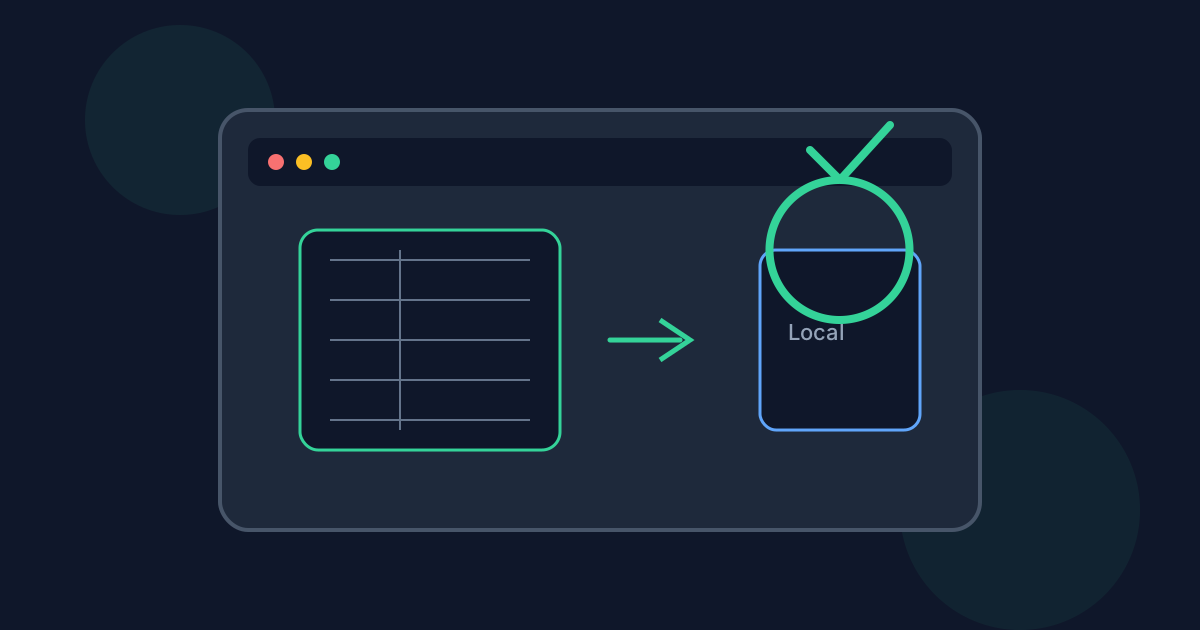
When you open a CSV in this tool, the browser reads the file bytes in memory and divides the record text locally. The download is a local Blob, or a local Blob wrapped in a ZIP for multiple parts. There is no Looty Tools conversion endpoint that receives your CSV contents for this workflow.
Your CSV file is processed locally in your browser and is not uploaded to our servers.
What can still leave the device
Page assets, analytics, authentication, or usage counters may still use the network as they do on other Looty Tools pages. Those channels are not used to send your CSV row data for splitting.
If you later email, sync, or upload the downloaded CSV parts yourself, that is outside this tool’s splitting path.
How local splitting compares to upload services
Upload-based splitters send the full file to a remote worker, which can be convenient for very large server-side jobs but expands the trust boundary. Browser-only splitting keeps the file on-device and is limited by browser memory instead.
- Local: file bytes stay in the browser during the split.
- Upload services: the provider receives and temporarily stores the file.
- Very large CSVs may still strain a low-memory device even when privacy is preferred.
Practical checklist
- Open /tools/split-csv on a modern browser.
- Confirm the privacy line on the tool page before choosing a file.
- Split and download the parts without signing in for the split itself.
- Review the downloaded files on your device before sharing them elsewhere.
Split CSV Without Uploading FAQ
- Is my CSV uploaded to Looty Tools while it is being split?
- No. For this tool, CSV contents are not uploaded to Looty Tools to perform the split.
- Does splitting work offline after the page has loaded?
- Once the page and libraries are loaded, splitting does not need a conversion API. A full offline guarantee depends on the browser cache and whether other site features need the network.
- Does JSZip send file contents anywhere when creating a ZIP?
- No. JSZip builds the ZIP archive locally in the browser from the CSV parts already generated on-device; it does not transmit file contents.
- How does this differ from upload-based CSV splitters?
- Upload services receive the full file on a remote worker before returning pieces. Browser-only splitting keeps the file on-device and is limited by browser memory instead.
- Where else should I read about private CSV splitting?
- See /guides/how-to-split-a-csv-file for the step-by-step workflow and /guides/split-large-csv-for-import-limits for a row-cap walkthrough.
Related guides
- How to Split a CSV FileSplit a CSV file into smaller CSV files locally in your browser: choose rows per file or number of files, keep the header row, and download one file or a ZIP.
- Split Large CSV for Import LimitsBreak a large CSV into row-capped batches that fit another system’s import limit, using rows-per-file splitting, a preserved header row, and predictable batch filenames.
- Browser-Based File PrivacyUnderstand local browser processing, when files stay on your device, practical privacy checks, and how Looty Tools discloses different processing models.