Calculators & everyday math
Sales Tax Rate vs. Sales Tax Amount
The rate is a percentage; the amount is the money it produces. Mixing them up — or not knowing where a combined rate comes from — is behind many sales tax surprises. This guide separates the two.
Ready to try the tool this guide describes?
Rate and amount
The rate is the percentage charged, such as 7.5%. The amount is what that percentage comes to on a particular price: 7.5% of $40 is $3.00. The same rate produces a larger amount on a larger price, and the amount on a receipt is what you actually pay.
Combined rates
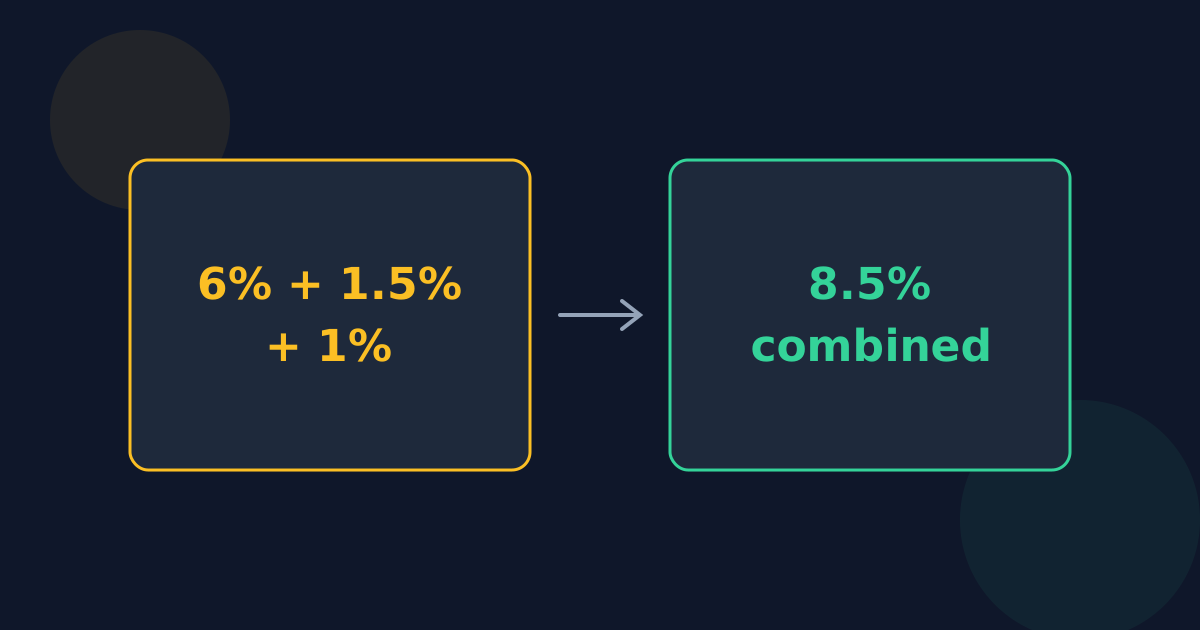
Where several authorities each charge sales tax — in the United States, often a state, a county, and a city — the rate at the register is the sum of their rates. A 6% state rate, a 1.5% county rate, and a 1% city rate make a combined rate of 8.5%.
Add the rates, then apply the total once: 8.5% of $200 is $17. Applying each rate separately and rounding each part can occasionally differ by a cent.
Estimating the rate from a receipt
Divide the tax by the price before tax and multiply by 100. A receipt showing $4.12 of tax on $49.95 implies about 8.25%: 4.12 ÷ 49.95 × 100 ≈ 8.248%. Because the tax was rounded to the cent, the result is close to the published rate but rarely exact.
Rate changes and percentage points
- If a rate rises from 6% to 7%, it has risen by 1 percentage point — but the tax on the same price has risen by about 16.67%.
- On a $300 purchase, that change adds $3: the tax goes from $18 to $21.
Rate vs. Amount FAQ
- What is the difference between a sales tax rate and the tax amount?
- The rate is the percentage; the amount is the money it comes to on a specific price.
- How do I combine state and local sales tax rates?
- Add them together — 6% + 1.5% + 1% is 8.5% — then apply the combined rate to the price.
- How can I work out the rate from a receipt?
- Divide the tax by the price before tax and multiply by 100. Expect a small difference from the published rate, because the tax was rounded to the cent.
- Does a higher rate always mean more tax?
- On the same price, yes. On different prices, compare the amounts: 5% of $100 is $5, less than 4% of $200, which is $8.
- Where do I find the correct rate?
- From the tax authority for the place of sale. Rates change and can differ between neighboring areas, so check an official source.
Related guides
- Calculate Sales TaxThe two-step and one-step ways to add sales tax to a price, how decimal rates work, and how the tax is rounded to the cent, with worked examples.
- Price Before TaxWork backward from a total that includes tax to the original price and the tax, why subtracting the rate is wrong, and how rounding affects it.
Open the tool
Jump into Sales Tax Calculator when you are ready to process your files.