Work, pay & shifts
Prorated Pay When You Start or Leave Mid-Period
The first and last paychecks of a job are the ones most likely to be prorated: you rarely start on the first day of a pay period or leave on its last. This guide works through both cases for salaried pay, explains when proration doesn’t apply, and lists other items that can appear on a first or final check so they aren’t mistaken for proration errors.
Ready to try the tool this guide describes?
Starting partway through a period
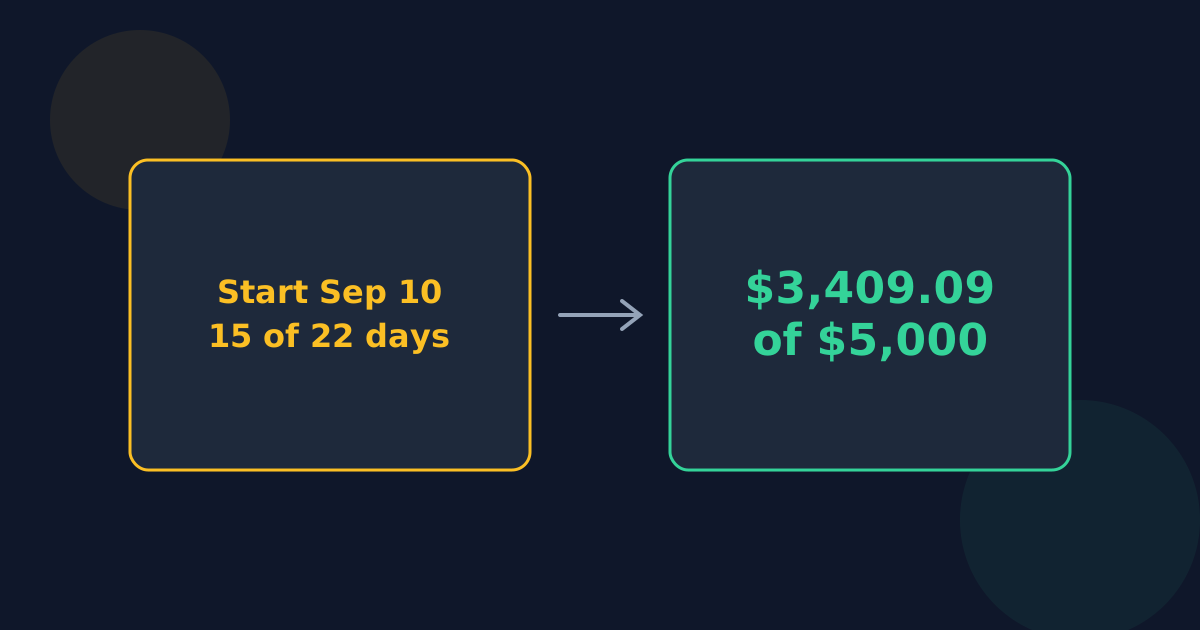
A $5,000.00 monthly salary, starting on Thursday, September 10, 2026. September 2026 has 22 working days, and 15 of them fall on or after September 10.
- By working days: $5,000.00 × 15 ÷ 22 = $3,409.09.
- By calendar days: September 10 to 30 is 21 of 30 days, so $5,000.00 × 21 ÷ 30 = $3,500.00.
- The employer’s method decides which figure you see; the difference here is $90.91.
Leaving partway through a period
A $1,800.00 biweekly salary over 10 working days, with a last day on the Tuesday of the second week: that is 7 working days, so $1,800.00 × 7 ÷ 10 = $1,260.00.
When proration applies
- Salaries and other fixed amounts per period are prorated.
- Hourly pay usually isn’t: the first and last checks simply pay the hours worked.
- Fixed allowances or stipends may be prorated in the same way as salary, depending on the policy.
Other items on a first or final check
Some differences on a first or last paycheck have nothing to do with proration. Depending on the employer’s policy and local rules, a final check may include a payout of unused paid time off, expense reimbursements, or adjustments for benefits deductions, and a first check may land in a later pay cycle than expected. Check those lines separately before comparing the prorated salary.
A quick check
| Situation | Calculation | Prorated pay |
|---|---|---|
| Start Sep 10, 2026, working days | $5,000.00 × 15 ÷ 22 | $3,409.09 |
| Start Sep 10, 2026, calendar days | $5,000.00 × 21 ÷ 30 | $3,500.00 |
| Leave on day 7 of 10 | $1,800.00 × 7 ÷ 10 | $1,260.00 |
Starting or Leaving Mid-Period FAQ
- How is my first paycheck prorated?
- By the share of the pay period from your start date: full-period pay × days worked ÷ days in the period, counted the way your employer counts days.
- How is a final paycheck prorated?
- The same way, using the days from the start of the period to your last day. 7 of 10 working days of $1,800.00 is $1,260.00.
- Is a first paycheck prorated for hourly workers?
- Usually not. Hourly workers are paid for the hours they actually work in the period.
- Why is my first paycheck later than expected?
- Depending on payroll cut-off dates, the first days worked may be paid in the next cycle. That affects timing, not the prorated amount.
- Does unused PTO count in the proration?
- No. Any payout of unused leave is a separate item under the employer’s policy and local rules, not part of the prorated salary.
Related guides
Open the tool
Jump into Pay Period Proration Calculator when you are ready to process your files.