Work, pay & shifts
How to Prorate a Paycheck
Prorating means paying only the share of a fixed amount that matches the part of the period you were eligible for — because you started mid-period, left before it ended, or had unpaid days. The standard method is a single ratio. This guide sets out the formula, works through examples by days and by hours, and explains how rounding to the cent is handled.
Ready to try the tool this guide describes?
The formula
Prorated pay = full-period pay × units to pay ÷ units in the full period.
- Units are days or hours, whichever your employer uses to measure the period.
- Count both the same way: working days with working days, calendar days with calendar days, scheduled hours with scheduled hours.
By working days
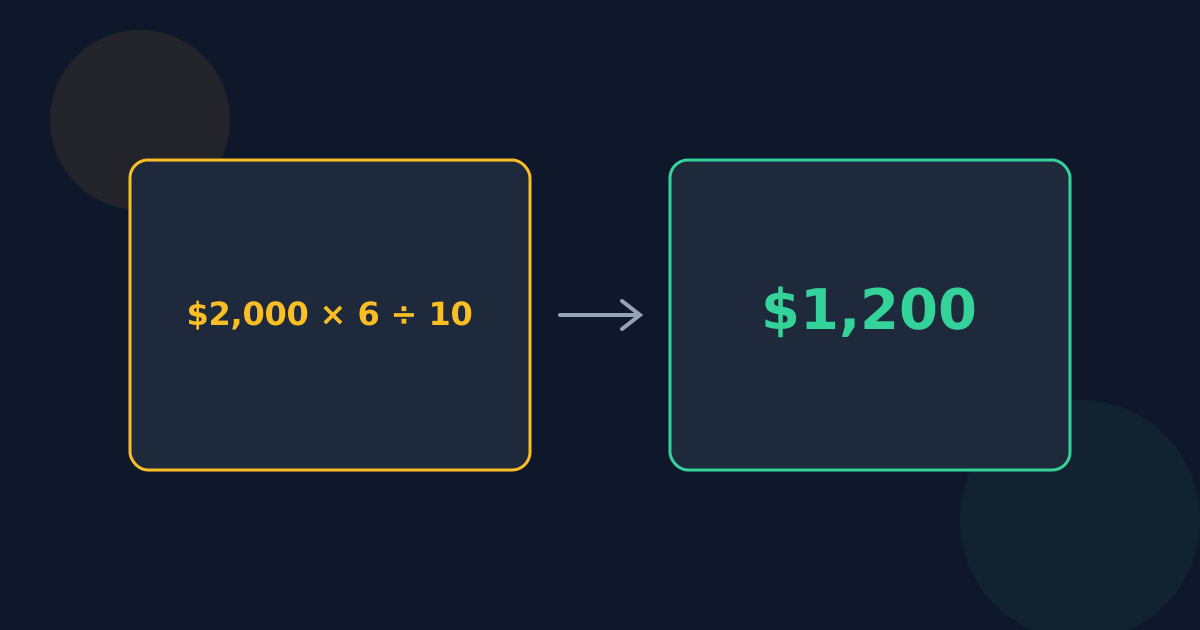
- Full biweekly pay: $2,000.00, over 10 working days.
- Days to pay: 6.
- Proration: 6 ÷ 10 = 60%.
- Prorated pay: $2,000.00 × 60% = $1,200.00. The $800.00 difference is left out.
By hours
A $3,000.00 period based on 80 scheduled hours, with 52.5 hours to pay: 52.5 ÷ 80 = 65.625%, so the prorated pay is $1,968.75.
More examples
| Full-period pay | Paid | Proration | Prorated pay |
|---|---|---|---|
| $2,000.00 | 6 of 10 days | 60% | $1,200.00 |
| $3,000.00 | 52.5 of 80 hours | 65.625% | $1,968.75 |
| $4,166.67 | 11 of 22 days | 50% | $2,083.34 |
| $2,500.00 | 7 of 22 days | 31.8182% | $795.45 |
Rounding to the cent
Most results aren’t whole cents: $2,500.00 × 7 ÷ 22 is $795.4545… Rounded to the cent, the prorated pay is $795.45, and the amount left out is $2,500.00 − $795.45 = $1,704.55, so the two still add up to the full period. Halfway cases round up: half of $4,166.67 is $2,083.335, which becomes $2,083.34.
How to Prorate Pay FAQ
- What does it mean to prorate a paycheck?
- To pay only the share of a full period’s pay that matches the days or hours you were eligible for.
- How do I prorate pay by days?
- Multiply the full-period pay by the days to pay and divide by the days in the full period. 6 of 10 days of $2,000.00 is $1,200.00.
- Can I prorate by hours instead of days?
- Yes, when the period is measured in scheduled hours. 52.5 of 80 hours of $3,000.00 is $1,968.75.
- Do hourly workers get prorated pay?
- Usually not: they are paid for the hours they work. Proration applies to fixed amounts such as salaries or stipends.
- Why does my employer’s prorated figure differ?
- Employers use different methods — calendar days, working days, or a daily rate from an annual salary — and may round differently.
Related guides
- Calendar vs. Working DaysHow counting calendar days or working days changes prorated pay for the same absence or start date, and why month length matters.
- Starting or Leaving Mid-PeriodWorked examples of prorated pay for a first paycheck and a last paycheck, when proration applies, and what else a first or final check can include.
Open the tool
Jump into Pay Period Proration Calculator when you are ready to process your files.