Work, pay & shifts
Multiple Call-Outs in One Day: How Minimums Apply
A single call-out minimum is straightforward. A second call the same night raises a harder question: does each call earn its own minimum, or do they share one? Policies answer it differently, and the difference can double the pay. This guide compares the common approaches with one worked example.
Ready to try the tool this guide describes?
One minimum or two?
- Separate minimums: each call-out is paid on its own, minimum included.
- Shared window: a second call that starts within the first call’s minimum period is covered by that same minimum.
- Actual time for later calls: the first call earns the minimum; later calls are paid only for the time worked.
A worked example
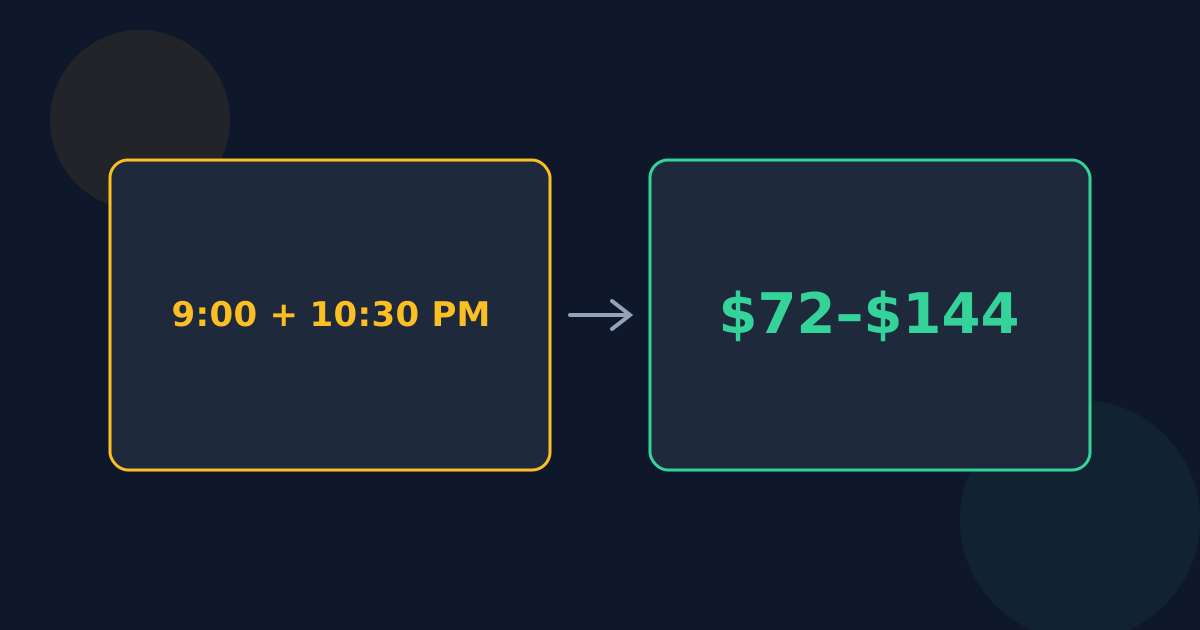
At $24 an hour with a 3-hour minimum and no multiplier, you are called at 9:00 PM and work an hour, then called again at 10:30 PM and work another hour.
| Rule | Paid hours | Pay |
|---|---|---|
| Separate minimums | 3 + 3 = 6 | $144.00 |
| Shared window (9:00 PM to midnight) | 3 | $72.00 |
| Minimum, then actual time | 3 + 1 = 4 | $96.00 |
When a later call runs past the window
Under a shared window, work that continues past the end of the first minimum is usually paid from the first call to the end of the last work. If the second call ran from 11:30 PM to 1:30 AM, that is 9:00 PM to 1:30 AM — 4.5 hours, or $108 — because it is longer than the 3-hour minimum.
Working it out with a single-call calculator
- Separate minimums: calculate each call on its own and add the totals.
- Shared window: enter the combined hours worked as one call.
- Minimum, then actual time: calculate the first call with the minimum; pay later calls as hours worked.
Daily and weekly hours
Several call-outs after a full shift can add up quickly. In states with daily overtime, such as California, those hours may also be overtime for the day; everywhere, they count toward weekly hours. Check whether your agreement lets call-out premiums and overtime apply to the same hours.
Multiple Call-Outs FAQ
- Do I get two minimums if I’m called out twice in one night?
- Only if your policy pays each call separately. Many policies treat a second call within the first call’s minimum period as covered by it.
- What is pyramiding in call-out pay?
- Paying more than one premium or minimum for the same hours. Many agreements prohibit it, which is why overlapping calls often share one minimum.
- What if I’m called again while still working the first call-out?
- That is usually treated as one continuous call-out, paid from the first call to the end of the work, with one minimum.
- Does a phone call or remote fix count as a call-out?
- Some policies have a separate, shorter minimum for remote work; others pay only the time spent. Check whether yours mentions remote response.
- How should I record several call-outs on a timesheet?
- Record each call’s start and end time separately, even if they will be combined, so payroll can apply the right rule.
Related guides
- Calculating Call-Out PayThe greater-of rule for call-out minimums step by step, with a table showing why pay stays flat until the minimum is passed and what that does to your rate.
- Call-Out Pay RulesHow call-out multipliers and flat allowances combine with a minimum: every paid hour, hours worked only, whichever is more, and allowances on top or toward it.
Open the tool
Jump into Call-Out Minimum Pay Calculator when you are ready to process your files.