Work, pay & shifts
How to Calculate Call-Out Minimum Pay
A call-out minimum makes sure a short emergency trip to work pays more than the few minutes it took. The rule is simple — you are paid for at least the minimum hours — but it creates a pay curve that surprises people: the pay stays flat until the minimum is passed. This guide works through the arithmetic and what it means for your effective hourly rate.
Ready to try the tool this guide describes?
The greater-of rule
Paid hours = the hours you actually worked, or the minimum, whichever is greater. The minimum doesn’t add to the hours worked; it only tops a short call-out up to the minimum.
Step by step
- Find the rate for call-out hours: the normal rate × any multiplier.
- Multiply the hours worked by that rate.
- If the hours worked are less than the minimum, the difference is the top-up.
- Pay the top-up at the rate your rule names, then add any allowance.
Pay at $22 an hour with a 3-hour minimum
| Hours worked | Top-up hours | Pay | Effective rate per hour worked |
|---|---|---|---|
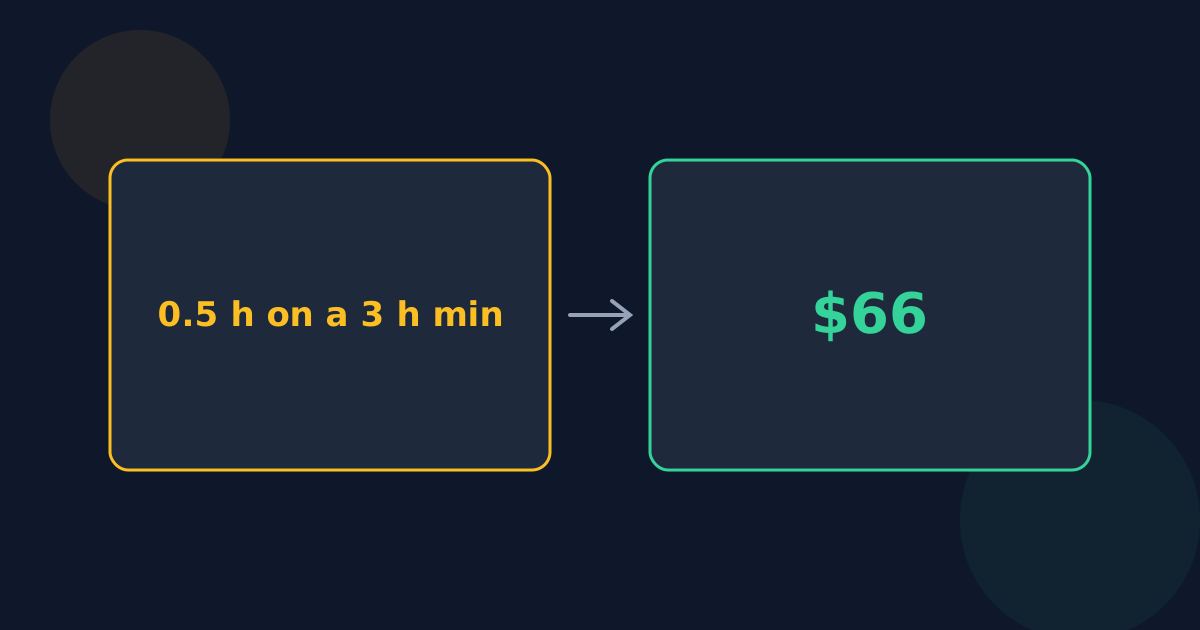
| 0.5 | 2.5 | $66.00 | $132.00/hr |
| 1 | 2 | $66.00 | $66.00/hr |
| 2.5 | 0.5 | $66.00 | $26.40/hr |
| 3 | 0 | $66.00 | $22.00/hr |
| 4.25 | 0 | $93.50 | $22.00/hr |
No multiplier is applied in this table, so every hour is paid at $22.
Why the pay stays flat
Up to the minimum, extra time worked doesn’t change the pay — it replaces top-up hours with worked hours one for one. That is why a 30-minute fix and a 2.5-hour job pay the same $66. Past the minimum, each extra hour adds the normal call-out rate again.
Where minimums come from
Most call-out minimums are set by employer policy or a union agreement. Some states, including California, Massachusetts, and New York, also have reporting-time or call-in pay rules for employees who report to work and are sent home early. Those laws have their own formulas and conditions, and they are not the same as a policy minimum for being called back after hours.
Calculating Call-Out Pay FAQ
- What is call-out pay?
- Pay for being called in to work outside your scheduled hours, often with a minimum number of paid hours per call-out.
- How long is a typical call-out minimum?
- Policies commonly use 2 to 4 hours, but the number comes from your policy or agreement, not a standard.
- Does travel time count toward a call-out minimum?
- It depends on the policy. Some count from the call, some from arrival on site; others pay travel separately.
- Is call-out pay the same as reporting-time pay?
- They are related. Reporting-time pay usually covers being sent home from a scheduled shift; call-out pay covers being called in when you weren’t scheduled.
- Do I get the minimum if the call-out is cancelled before I arrive?
- Only if your policy says so. Some pay a reduced amount for a cancelled call; many pay nothing unless you start travelling or arrive.
Related guides
- Call-Out Pay RulesHow call-out multipliers and flat allowances combine with a minimum: every paid hour, hours worked only, whichever is more, and allowances on top or toward it.
- Multiple Call-OutsSeparate minimums, a shared window, or actual time for later calls: how two call-outs in one night are paid, with a worked example and pyramiding explained.
Open the tool
Jump into Call-Out Minimum Pay Calculator when you are ready to process your files.