Calculators & everyday math
Meters per Second vs. Kilometers per Hour
Physics and engineering measure speed in meters per second; road signs and weather reports use kilometers per hour. The link between them is the number 3.6, and this guide shows where it comes from and how everyday speeds look in both units.
Ready to try the tool this guide describes?
Where 3.6 comes from
An hour has 3,600 seconds and a kilometer has 1,000 meters. Moving 1 meter every second covers 3,600 meters in an hour, which is 3.6 kilometers. So 1 m/s = 3.6 km/h exactly.
Everyday speeds
| m/s | km/h | Roughly |
|---|---|---|
| 1.4 | 5.04 | A brisk walk |
| 10 | 36 | An elite sprinter |
| 20 | 72 | A car on an open road |
| 340 | 1,224 | The speed of sound in air |
Why science uses meters per second
Meters and seconds are SI base units, so formulas for motion, force, and energy work directly with m/s without extra conversion factors.
Converting quickly
- m/s to km/h: multiply by 3.6.
- km/h to m/s: divide by 3.6. 90 km/h is 25 m/s.
m/s vs. km/h FAQ
- How do I convert m/s to km/h?
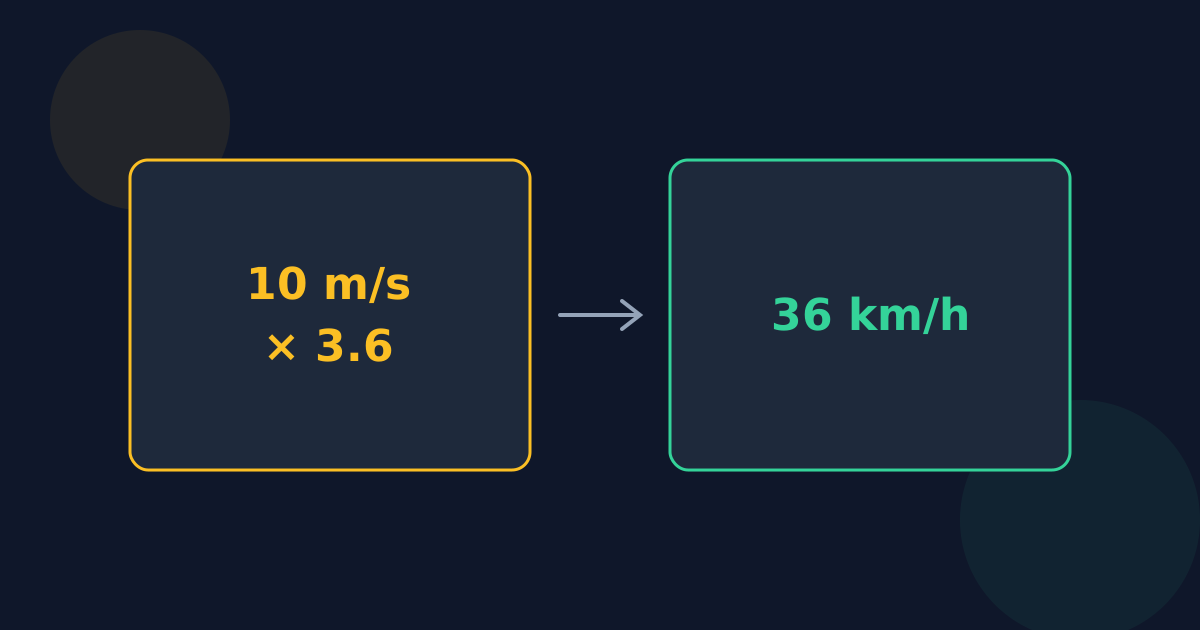
- Multiply by 3.6: 10 m/s is 36 km/h.
- How do I convert km/h to m/s?
- Divide by 3.6: 108 km/h is 30 m/s.
- What is 1 m/s in mph?
- About 2.236936292 mph.
- Why does physics use m/s?
- Meters and seconds are SI base units, which keeps formulas simple.
- How fast is the speed of sound?
- About 340 m/s in air at around 15 °C, or roughly 1,225 km/h; it changes with temperature.
Related guides
Open the tool
Jump into Speed Converter when you are ready to process your files.