Calculators & everyday math
Knots Explained: Speed at Sea and in the Air
Ships and aircraft measure speed in knots, a unit based on the nautical mile rather than the ordinary mile. This guide explains what a knot is, why navigation uses it, and how it converts to everyday units.
Ready to try the tool this guide describes?
What a knot is
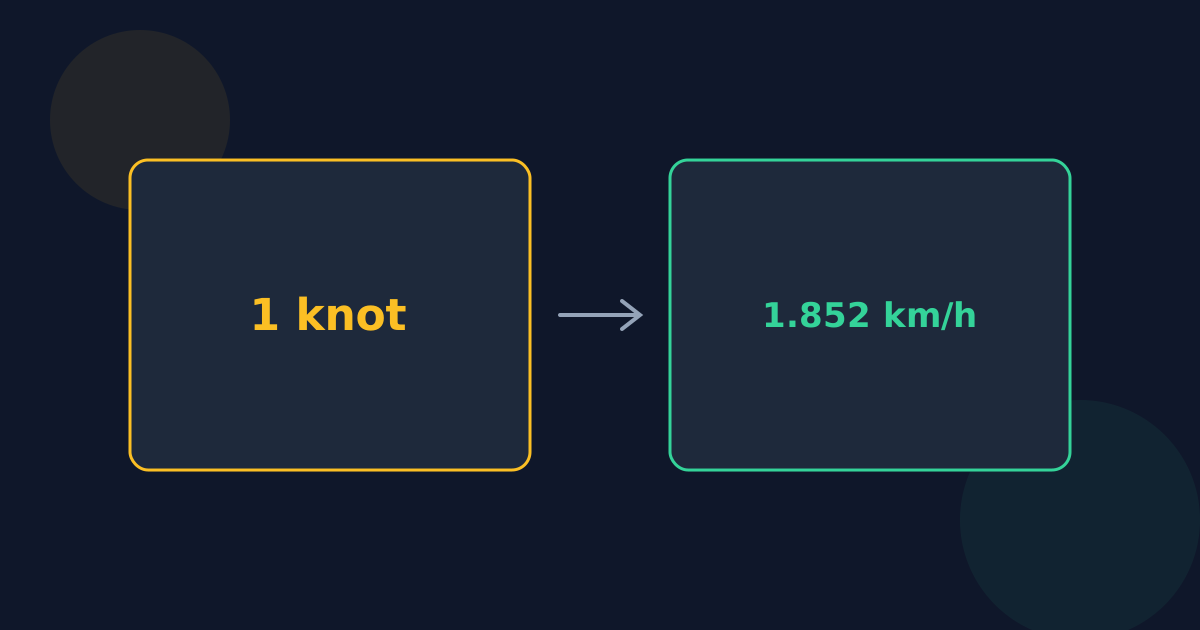
A knot is one nautical mile per hour. A nautical mile is exactly 1,852 meters, so 1 knot is exactly 1.852 km/h, about 1.150779448 mph, or about 0.5144444444 m/s.
Why navigation uses nautical miles
The nautical mile was historically based on one minute of latitude, so distances on a chart can be read from the latitude scale. It was standardized internationally at exactly 1,852 meters in 1929.
Where the name comes from
Sailors once measured speed by letting out a line with knots tied at regular intervals behind the ship and counting how many knots passed in a set time. The count became the unit.
Common speeds
| Knots | km/h | mph |
|---|---|---|
| 10 | 18.52 | 11.50779448 |
| 20 | 37.04 | 23.01558896 |
| 100 | 185.2 | 115.0779448 |
| 500 | 926 | 575.389724 |
“Knots per hour” is incorrect: a knot already means per hour.
Knots Explained FAQ
- How fast is 1 knot?
- Exactly 1.852 km/h, or about 1.15 mph.
- Is a knot faster than a mile per hour?
- Yes, because a nautical mile is longer than an ordinary mile.
- Why do pilots use knots?
- Aviation shares navigation methods with shipping, where nautical miles and knots are standard worldwide.
- How many meters per second is a knot?
- About 0.5144444444 m/s.
- What is 30 knots in mph?
- About 34.5 mph (34.52338344).
Related guides
Open the tool
Jump into Speed Converter when you are ready to process your files.