Home, moving & space
Measuring the Delivery Path for a Washer and Dryer
Washers and dryers tend to live in the tightest spaces in a home: laundry closets, basements, and utility rooms with narrow doors. Most of them are moved upright on a dolly, so the doorway has to clear their front-to-back depth or their width with very little room to spare. This guide walks through measuring the route and the destination, and the extra inches hoses, vents, and handles add.
Ready to try the tool this guide describes?
Measure the machine as it will be moved
- Width, depth, and height of the cabinet — and how far the door, handle, or control panel sticks out.
- Depth including hoses or the vent connection if they stay attached.
- Height on the dolly, if it will be wheeled in.
- For a stacked pair, the height of each machine separately: they are usually moved apart and stacked in place.
Closet doors are the usual problem
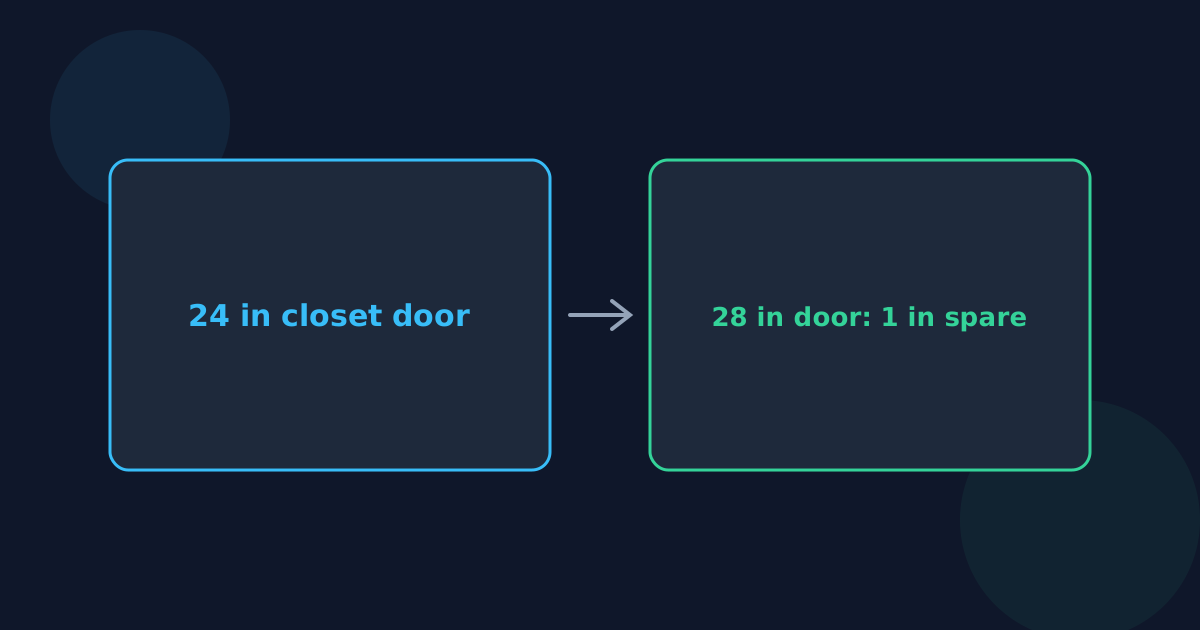
Laundry closets often have narrower doors than the rooms around them. A washer 27 in wide, 31 in deep, and 39 in high can’t get through a 24 in closet door at all — 3 in too wide even front first — whether it stays upright or is laid down. The same machine goes through a 28 in door front first with 1 in to spare, and a 2 in door handle doesn’t change that, because the handle is on the side that travels through.
Walk the route
- Every door on the way, measured open: clear width and height.
- Turns into the laundry area, especially from a hallway.
- Basement or utility stairs: usable width, headroom, and the turn at the bottom.
- The final space: width, depth, and height, with room behind for hoses and the vent.
Allow for the connections
The space a washer or dryer needs in place is more than the cabinet. Hoses, the drain, and a dryer vent take room at the back, and the doors need room to open at the front. Installation guides list the clearances; measure for those as well as for getting the machine through the door.
Washer and Dryer Delivery FAQ
- Do washers and dryers have to stay upright?
- Moving them upright is common practice, and front-loaders often need transit bolts refitted before a move. Check the manual for your model.
- Which way should a washer go through a door?
- Whichever side is narrower faces the opening. For many machines the width is slightly less than the depth, so they go through front first.
- How much space do I need behind a washer?
- Enough for the hoses and drain without kinking them, and whatever the installation guide specifies — measure it, rather than pushing the machine flush to the wall.
- Can a stacked washer and dryer be moved together?
- Usually not; they are unstacked, moved separately, and restacked with the stacking kit in place.
- Do I need to measure the dryer vent?
- Yes for the final position: the vent connection adds depth and needs a clear, uncrushed run to the outside.
Related guides
- Fridge Doorway ClearanceWhich refrigerator dimension has to clear a doorway, how handles and doors change it, and why taking parts off is a decision for the manual rather than the delivery day.
- Packaging and Dolly ClearanceHow a carton adds to every side of an appliance and a dolly adds to its height, with worked examples, and when to unbox before a tight doorway.
Open the tool
Jump into Appliance Through Doorway Fit Calculator when you are ready to process your files.