Shipping & packaging
How to Reduce Length Plus Girth
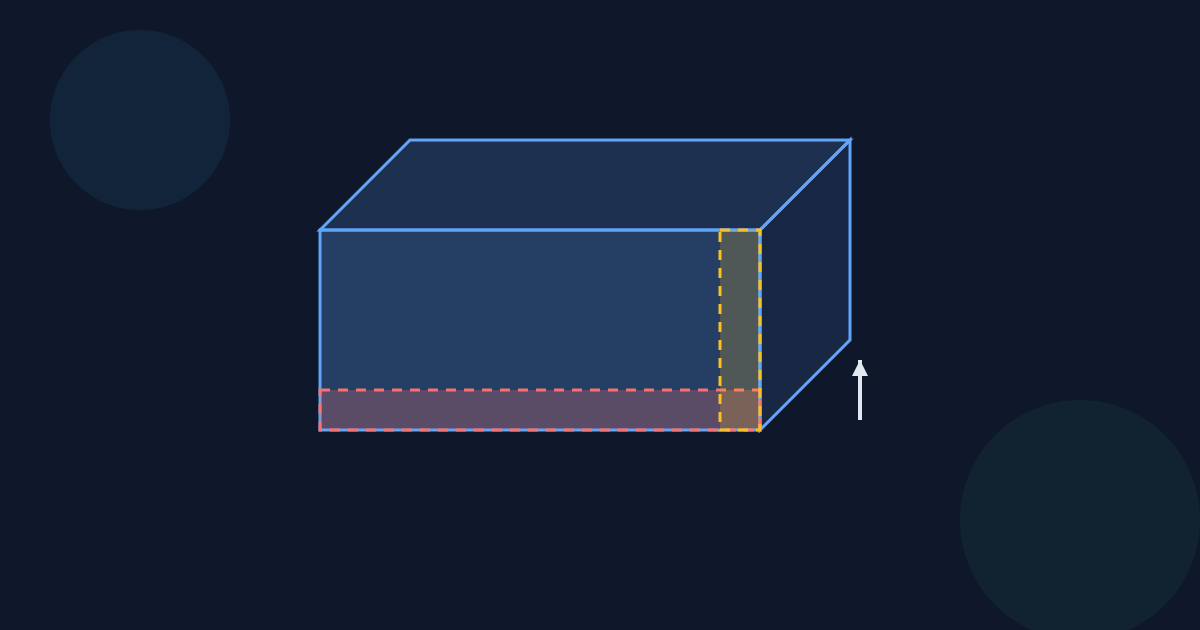
If a package is over a length-plus-girth limit, not every inch you trim counts the same. Because the girth doubles the two shorter sides, trimming one of those usually pays twice as much as trimming the length.
Ready to try the tool this guide describes?
Short sides count twice
Length + girth = L + 2W + 2H. Taking 1 in off the length lowers the total by 1 in; taking 1 in off the width or the height lowers it by 2 in.
| Change to a 20 × 12 × 8 in box | New box | Length + girth |
|---|---|---|
| None | 20 × 12 × 8 in | 60 in |
| 2 in off the length | 18 × 12 × 8 in | 58 in |
| 2 in off the width | 20 × 10 × 8 in | 56 in |
| 2 in off the height | 20 × 12 × 6 in | 56 in |
When the length stops being the longest side
Trimming the length only lowers the total one-for-one until it drops below the middle side. After that, the middle side becomes the length and the trimmed side joins the girth, where every inch counts twice. To get the 20 × 12 × 8 in box down to 50 in by shortening only the 20 in side, it has to come down to 11 in — and then the box is 12 × 11 × 8 in, with a length plus girth of exactly 50 in.
Limits you can’t reach by trimming the length
However short the longest side gets, the other two still count: the middle side as the new length and twice the shortest side in the girth. For the 20 × 12 × 8 in box that floor is 12 + 2 × 8 = 28 in before the trimmed side adds anything, so a limit at or below 28 in can’t be met by shortening the length alone.
Practical ways to trim
- Choose a box closer to the product’s size, especially in its two shorter dimensions.
- Fold or compress soft goods to reduce thickness.
- Split a long, heavy shipment into two packages if the length is the problem.
- Check that a smaller box still leaves room for any padding you need.
Check the result with the same rounding
If your carrier rounds each side up, a trim that doesn’t cross a whole unit changes nothing: a 12.4 in side cut to 12.1 in still rounds up to 13 in. Plan trims in whole units when rounding applies.
Reducing Length + Girth FAQ
- Which dimension should I reduce to lower length plus girth?
- One of the two shorter sides. Each unit trimmed from them lowers the total by two, against one for the length.
- Why doesn’t shortening the length always help as much as expected?
- Once it drops below the middle side, that side becomes the length, and the shortened side is counted twice in the girth instead.
- How much do I need to trim to get under a limit?
- Find how far over the limit you are. Trimming a shorter side, you need half that much; trimming the length, the full amount — as long as it stays the longest side.
- Can I get any box under any limit by shortening one side?
- No. The other two sides set a floor. For a 20 × 12 × 8 in box, shortening the 20 in side can’t bring the total to 28 in or below.
- Does reducing length plus girth lower dimensional weight too?
- Any trim reduces the volume, so it lowers dimensional weight as well — but by different amounts depending on which side you trim.
Related guides
- Calculating Length + GirthA step-by-step method for working out a package’s length plus girth in inches or centimeters, with worked examples, rounding, and common slips.
- Length + Girth vs DIM WeightHow a package’s length plus girth and its dimensional weight differ, why carriers use both, and how one box can pass one check and be affected by the other.
Open the tool
Jump into Length + Girth Calculator when you are ready to process your files.