Shipping & packaging
How to Plan a Pallet Layer Pattern
A pallet layer pattern decides how many cartons go on each layer — and therefore on the whole pallet. Planning one takes a few divisions and a willingness to try more than one arrangement.
Ready to try the tool this guide describes?
Measure the carton footprint
The footprint is the carton’s length and width as it sits on the pallet. Measure the outside of the carton, including any bulge, because the layer has to hold the real carton.
Try both single orientations
| Carton footprint | Lengthwise on 48 × 40 in | Turned 90° |
|---|---|---|
| 16 × 12 in | 3 × 3 = 9 | 4 × 2 = 8 |
| 20 × 15 in | 2 × 2 = 4 | 3 × 2 = 6 |
| 12 × 10 in | 4 × 4 = 16 | 4 × 3 = 12 |
Then try mixing
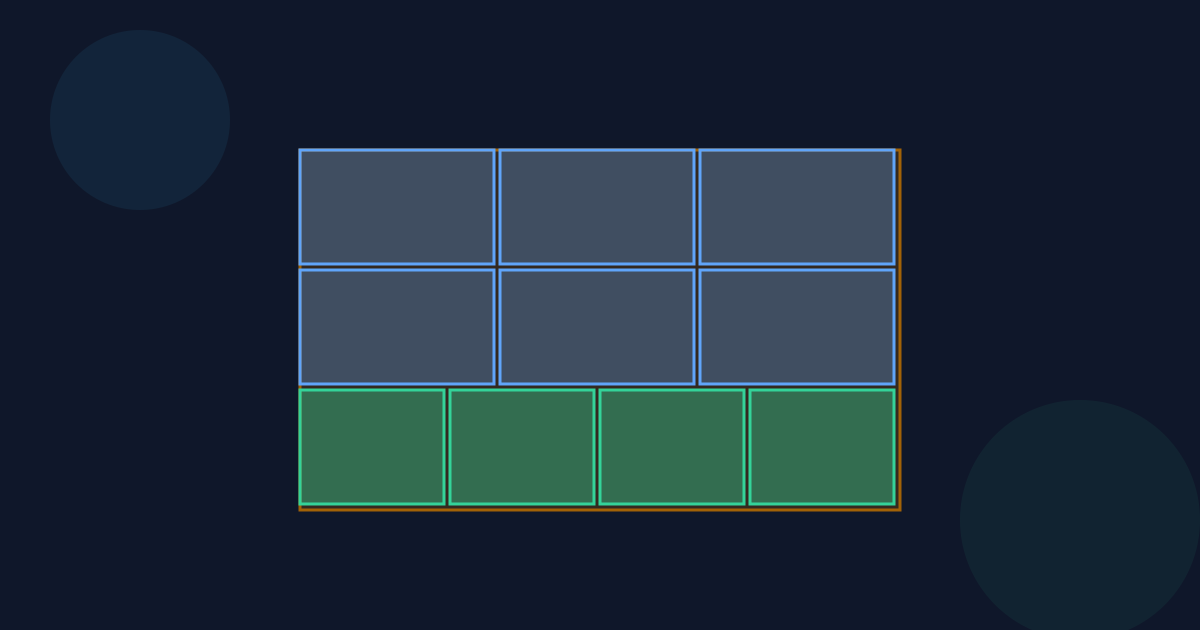
If one orientation leaves a strip of pallet too narrow for another row, turning some cartons can fill it. Two rows of 16 × 12 in cartons lengthwise take 24 in of the 40 in width; the remaining 16 in strip fits a row of four turned cartons, for 10 in all.
Keep within the edges
Plan the layer within the pallet’s footprint unless whoever handles the pallet accepts overhang. Overhanging cartons are unsupported at the edge.
Check the plan
- Count the cartons in the drawn pattern, not just the arithmetic.
- Make sure no two cartons overlap where the orientations meet.
- Note any deck left uncovered — it may let the layer shift.
Planning a Pallet Layer FAQ
- How do I work out a pallet layer pattern?
- Divide the pallet’s length and width by the carton footprint both ways round, then try mixing the two orientations to use any leftover strip.
- How many 12 × 10 inch cartons fit in a 48 × 40 inch layer?
- 16, lengthwise in a 4 × 4 grid.
- Should I measure the carton inside or outside for a layer?
- Outside — the layer holds the whole carton, board and bulges included.
- Why does turning some cartons help?
- It can fill a strip that is too narrow for another row in the first orientation.
- What if the pattern leaves bare deck?
- That is unused pallet space. It’s fine for the cartons above it but may let the layer move unless the load is secured.
Related guides
- Mixed-Orientation LayersHow two-block pallet layer patterns work, when mixing carton orientations fits more than a single orientation, and the limits of checking only these patterns.
- Gaps Between CartonsWhy spacing between cartons can cost whole rows on a pallet layer, how to calculate cartons per row with gaps, and when the gap is worth it.
Open the tool
Jump into Pallet Layer Calculator when you are ready to process your files.