Shipping & packaging
How to Plan a Container Load Step by Step
A container load plan answers where everything goes before anything is loaded. Done on paper first, it shows what fits, what is left at the doors, and what to fix before the truck arrives.
Ready to try the tool this guide describes?
1. List what’s going in
For each kind of cargo, write down one item’s length, width, and height, the quantity, the weight of one, whether it must stay upright, and whether anything can be stacked on it.
2. Check each item against the inside and the door
An item has to fit inside in some allowed position, and fit through the door in the position it will sit. An item that fails either check needs a different plan before anything else is worked out.
3. Decide the order
Cargo loaded first ends up at the closed end and comes out last. Put first what should be unloaded last, and keep each kind together so it is easy to count and secure.
4. Build it in walls
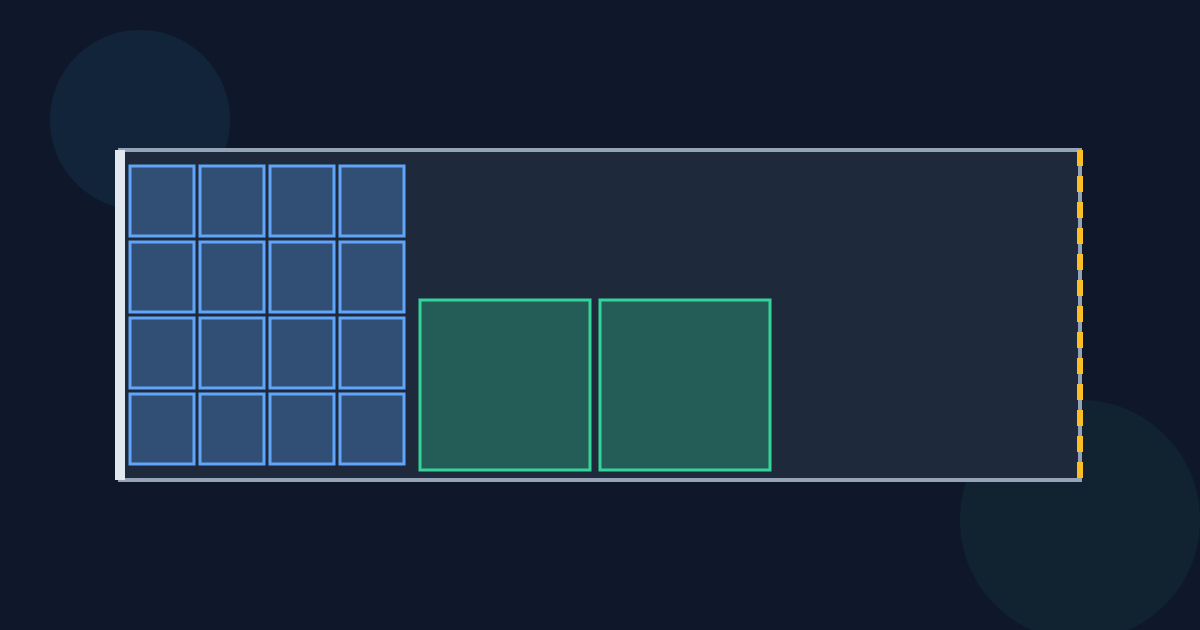
Fill the width and height with one kind of item, one item deep — a wall — and repeat until that kind is placed. In an example container 232 × 92 × 94 in inside, 24 × 18 × 20 in cartons go 5 across and 4 high, 20 to a wall; 60 cartons take 3 walls, 72 in of floor.
5. Check what’s left
After the last section, measure the free floor at the doors, the volume used, and the total weight against the payload. In the example, adding four 48 × 40 × 50 in crates that can’t be stacked uses another 96 in, leaving 64 in free at the doors and 44.98% of the volume used.
The example plan
| Type | One item | Quantity | Per wall | Walls | Floor used |
|---|---|---|---|---|---|
| A | 24 × 18 × 20 in, stackable | 60 | 20 (5 across × 4 high) | 3 | 0 to 72 in |
| B | 48 × 40 × 50 in, not stackable | 4 | 2 (2 across × 1 high) | 2 | 72 to 168 in |
Planning a Container Load FAQ
- What information do I need to plan a container load?
- The container’s inside size and door opening, and for each kind of cargo its size, quantity, weight, and whether it must stay upright or can be stacked on.
- Which cargo should go in first?
- What should come out last, since it ends up at the closed end. Keeping each kind together also makes counting and securing easier.
- What is a wall in container loading?
- One layer of items, one item deep, filling the width and height of the container. A section of one kind of cargo is a run of walls.
- How do I know if the plan is over the payload?
- Add up the weight of everything placed and compare it with the container’s payload. A plan can fit by space and still be too heavy.
- Does a load plan cover how cargo is secured?
- No. Bracing, blocking, lashing, and weight distribution are separate steps that need their own rules and expertise.
Related guides
- Mixed Cargo Sizes in One ContainerHow several cargo sizes share one container: separate sections, partly filled walls, item positions chosen per type, and where the wasted space hides.
- Non-Stackable Cargo in a Load PlanWhat cargo that can’t be stacked on costs in floor space and volume, how to plan around it, and why its height matters as much as its footprint.
Open the tool
Jump into Container Loading Calculator when you are ready to process your files.