Home, moving & space
How to Measure an Elevator Before Moving Furniture
Building managers will tell you an elevator’s rated load, but rarely its usable inside size, and the numbers on a brochure are usually wall to wall. Furniture has to fit the space that is actually left once handrails, pads, and the door frame take their share. This guide covers the five measurements that matter, where to take each one, and the mistakes that make a tape measure lie.
Ready to try the tool this guide describes?
The five measurements
| Measurement | Where to take it | Why it matters |
|---|---|---|
| Door clear width | Edge to edge of the doors when fully open, or frame to frame if the frame is narrower | The widest cross-section that can pass |
| Door clear height | Cabin floor to the underside of the door frame | What an item stood on end must clear |
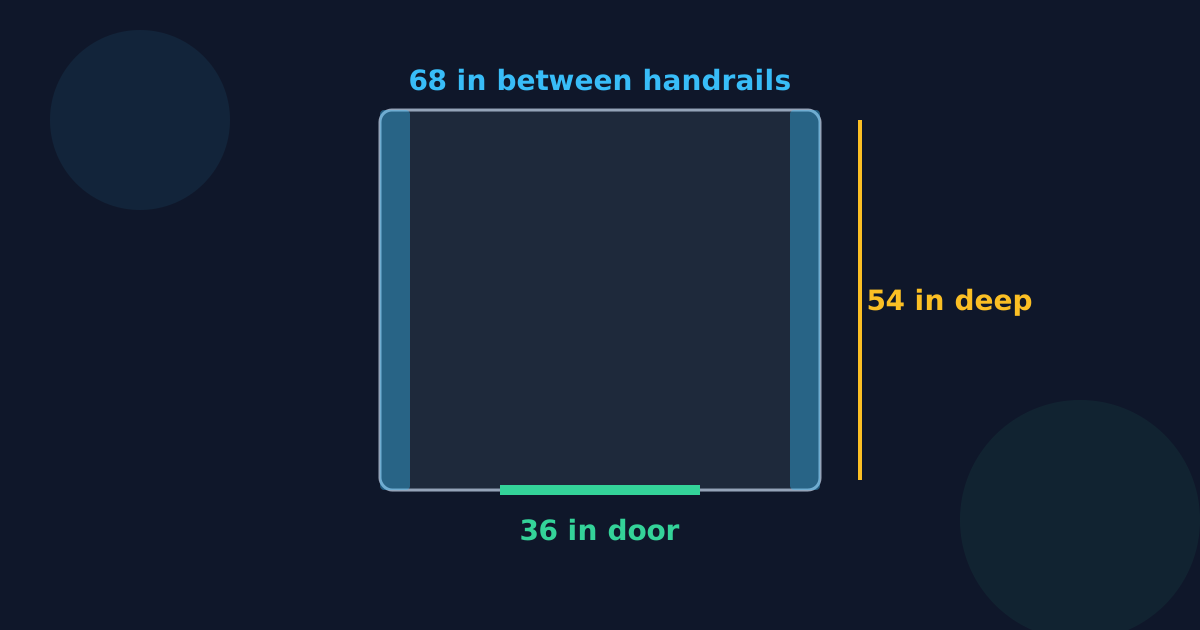
| Cabin width | Along the wall with the doors, between handrails or pads | Room for an item carried sideways |
| Cabin depth | From the closed doors to the back wall, between pads | The longest item that can lie in the cabin with the doors shut |
| Cabin height | Floor to the lowest light, panel, or vent | Room to stand tall items up |
Measure each one twice, at the narrowest point, and write down whether it was taken with pads hung or not.
Measure between the handrails, not the walls
Handrails and padding hooks stick out from the walls, and they are at hip height — exactly where a dresser or sofa will be. If a handrail stands 3 in off each side wall, a cabin that is 72 in wall to wall gives a 66 in item room to sit across it. Measure from rail to rail, or rail to wall, at the height the furniture will be.
Moving pads hung for your move take another inch or so on every wall they cover. If the building hangs pads, measure with them up.
Depth is measured to the closed doors
The depth that matters is the space behind the doors once they shut. Measure from the inside face of the closed doors, or the line of the door track on the floor, to the back wall or its handrail. An item longer than that can’t ride lying down, however wide the cabin is.
Some elevators have a back panel that opens into a recess for stretchers. If yours has one, it changes what fits — but it needs the building’s key and staff, so ask before you count on it.
Don’t skip the space outside
The cabin is only half of it. A long item has to be lined up with the doors before it can go in, which needs a clear run in front of them at least as long as the item, or a lobby with room to turn it. Measure the lobby’s depth from the doors to the opposite wall, and the clear length along the door wall on the side you will come from, up to the first planter, bench, or corner.
Write down the rated load too
- The rated load is on a plate inside the cabin or on the certificate posted near it.
- It is a limit for everything riding: the furniture, the dolly, and the people.
- A freight or service elevator usually has a higher rated load and bigger doors — ask whether the building has one for moves.
Measuring an Elevator FAQ
- Should I measure the elevator door open or closed?
- Fully open for the door opening, and closed for the cabin depth. The opening is what the item passes through; the closed doors are what it has to fit behind.
- Can I get the cabin size from the building’s documents?
- Sometimes, but documents usually give wall-to-wall sizes before handrails and pads. Measure it yourself, at the height the furniture will be.
- What if the doors are not centred in the front wall?
- It doesn’t change a straight carry, but it changes whether an item could be turned inside. Note which side the doors are on and how much wall is beside them.
- Do I need to measure the ceiling height?
- Yes, if anything will stand on end. Measure to the lowest light or panel, not the ceiling tile above it.
- How accurate do the measurements need to be?
- To the nearest quarter inch or half centimeter. Furniture that fits with less than an inch to spare depends on measurements that precise, and on room for hands.
Related guides
- Elevator Door vs CabinWhy furniture that fits an elevator cabin can still be stopped by its door, with examples against one elevator and the tests that rule an item out at any angle.
- Furniture in Apartment ElevatorsBooking the elevator, protecting it, lining long pieces up in a narrow lobby, and reading the rated-load plate when moving furniture in an apartment building.
Open the tool
Jump into Elevator Furniture Fit Calculator when you are ready to process your files.