Home, moving & space
How to Measure a Refrigerator Installation Space
The width printed on a refrigerator’s box is not the width of the space it needs, and a cabinet opening is rarely the same size top to bottom. Measuring the space properly takes ten minutes and a level, and it is the difference between a refrigerator that slides in and one that sticks out, overheats, or blocks its own door. This guide covers what to measure, where, and what to write down.
Ready to try the tool this guide describes?
Width: measure in three places
Measure the opening’s width near the floor, at counter height, and near the top. Walls are rarely plumb, cabinets are not always square, and baseboards or trim can narrow the bottom. Use the smallest of the three.
Then compare it with the refrigerator’s width plus the side clearance its manual asks for. A 35.75 in refrigerator centred in a 37 in space has 0.63 in each side — fine if the manual asks for 1/8 in, not if it asks for an inch.
Height: to the lowest thing above
Measure from the floor to the underside of the cabinet above, or to the ceiling if there is none, at the front and the back. Floors slope and cabinets sag. Levelling feet can raise or lower the refrigerator a little, but plan on the height in the spec sheet.
Depth: to the front edge, not the counter
Measure from the back wall to the front edge of the side walls or cabinets — the line the refrigerator’s doors will sit in front of or behind. Note the outlet, water valve, and any pipe on the back wall: they set how close the refrigerator can be pushed.
A standard-depth refrigerator often sticks out past the counters. That is not a fit problem in itself, but it takes floor space in front, which the door swing needs.
The space in front and beside
- Measure from the alcove’s front edge to the nearest island, table, or opposite wall. The doors need that space to open.
- Note whether a wall or tall cabinet carries on forward beside the hinge side. A door can’t swing past a wall that close.
- Check the path from the front door to the kitchen separately; fitting the alcove doesn’t mean it gets there.
What to have in hand when shopping
| Measurement | Example |
|---|---|
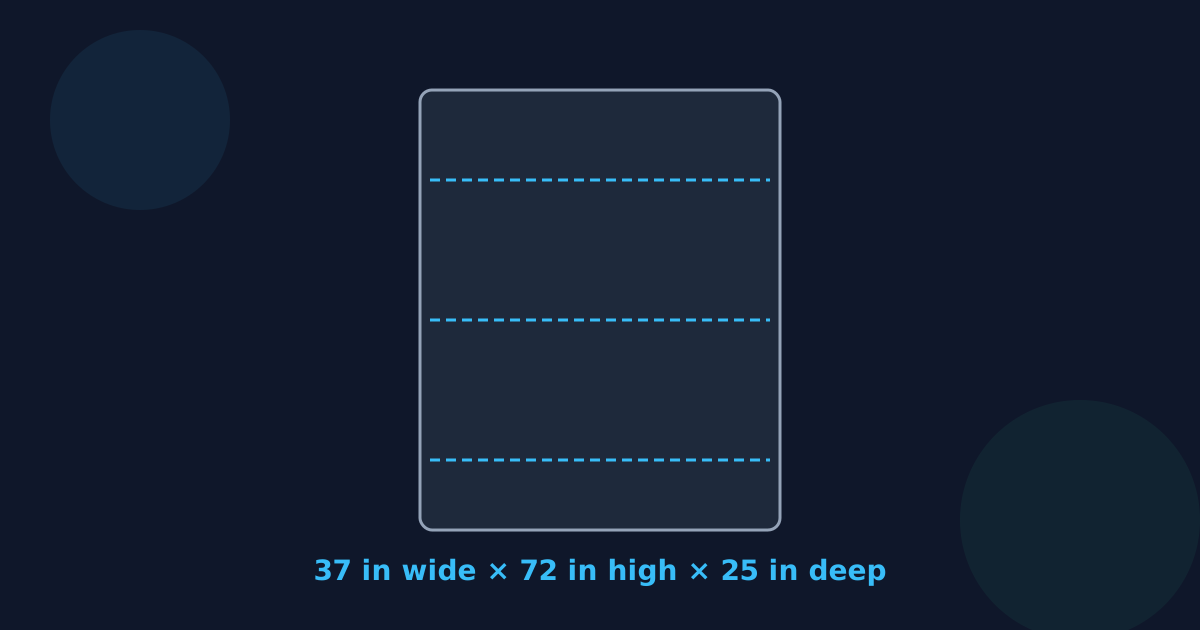
| Narrowest width | 37 in |
| Lowest height | 72 in |
| Depth to the front edge | 25 in |
| Clear space in front | 48 in |
| Hinge side | Open floor, or a wall carrying on |
With these, any refrigerator’s spec sheet — width, height, depth, door width, and installation clearances — can be checked in the Appliance Alcove & Door-Swing Clearance Calculator.
Measuring a Fridge Space FAQ
- Do I measure with the old refrigerator still in place?
- Pull it out if you can. Its sides hide the walls, and the space behind it is where outlets and water lines are.
- Which width counts if the opening narrows at the bottom?
- The narrowest. The refrigerator has to pass every point, and trim at floor level is a common surprise.
- Should the depth include the handles?
- The space’s depth is just the space. The refrigerator’s depth without handles goes in the calculator, with the handles entered separately.
- What if the floor isn’t level?
- Measure the height at the high point of the floor. Levelling feet take up small differences, not large ones.
- Do I need to allow space for the water line?
- Yes. Coiled water line and the plug need room behind the refrigerator; the manual’s rear clearance usually allows for it.
Related guides
- Fridge Door SwingHow far a refrigerator door reaches when it opens to 90°, why the hinge position changes it, and how walls, handles, and French doors affect the room it needs.
- Installation ClearancesWhat a refrigerator’s side, top, and rear installation clearances are for, why they differ between models, where to find yours, and how they change the fit.
Open the tool
Jump into Appliance Alcove & Door-Swing Clearance Calculator when you are ready to process your files.