Shipping & packaging
How to Calculate Box Clearance
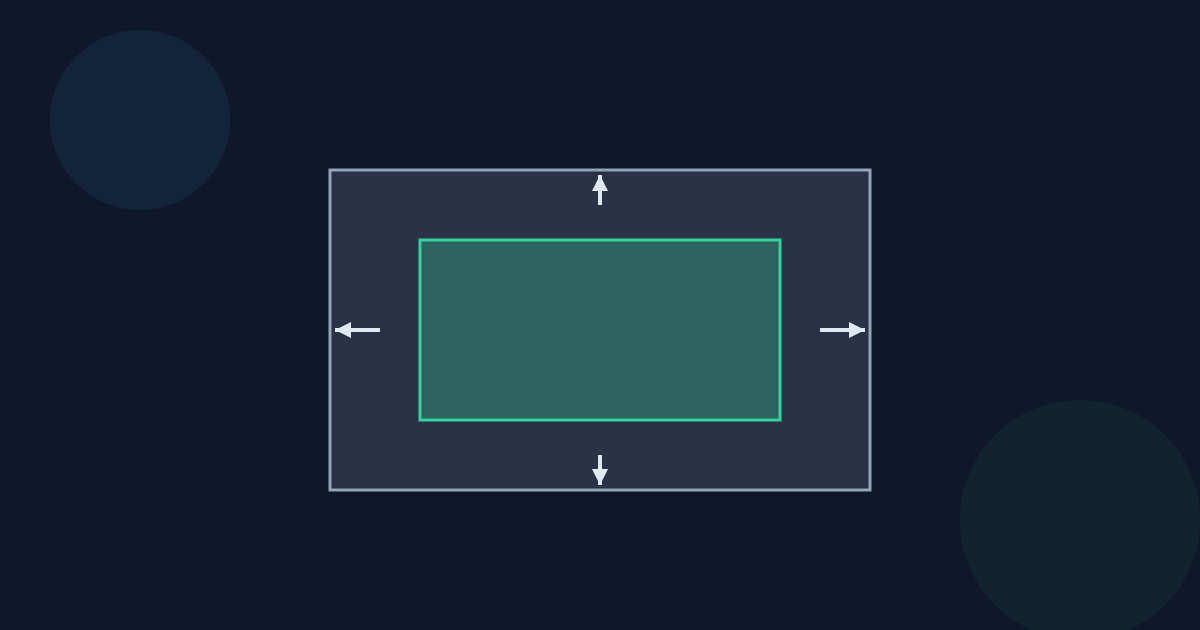
Box clearance is the space between a product and the inside walls of its box. It is three subtractions — one per axis — and a division by two if you want the room on each side.
Ready to try the tool this guide describes?
The three subtractions
- Measure the box’s inside length, width, and height.
- Measure the product the way it will sit.
- Subtract each product side from the matching box side: that is the total clearance along each axis.
- Halve each figure for the room on each side when the product is centered.
Worked examples
| Box (inside) | Product | Total clearance (L · W · H) | Per side, centered |
|---|---|---|---|
| 12 × 10 × 8 in | 11 × 9 × 7 in | 1 in · 1 in · 1 in | 0.5 in · 0.5 in · 0.5 in |
| 16 × 12 × 10 in | 14 × 9 × 6 in | 2 in · 3 in · 4 in | 1 in · 1.5 in · 2 in |
| 40 × 30 × 20 cm | 36 × 24 × 18 cm | 4 cm · 6 cm · 2 cm | 2 cm · 3 cm · 1 cm |
When a clearance is negative
A negative result means the product is bigger than the box along that axis, the way you measured it. Before giving up, try it another way round: a 7 × 9 × 11 in product doesn’t fit a 12 × 10 × 8 in box as entered, because 11 in is taller than 8 in, but laid as 11 × 9 × 7 in it has 1 in to spare along every axis.
Adding volume for context
Once the product fits, subtract its volume from the box’s inside volume to see the unused space. In the 16 × 12 × 10 in box, a 14 × 9 × 6 in product takes up 756 of 1,920 in³ — 39.38% — leaving 1,164 in³ empty.
Measuring tips
- Measure inside the box at the bottom, where the flaps don’t get in the way.
- Measure the product at its widest points, including handles or bulges.
- Keep every measurement in the same unit.
Calculating Box Clearance FAQ
- What is the formula for box clearance?
- Box inside side − product side, for each axis. Divide by two for the clearance on each side with the product centered.
- What is the clearance per side of an 11 × 9 × 7 inch product in a 12 × 10 × 8 inch box?
- 0.5 in on every side: 1 in of total clearance along each axis, split between the two sides.
- What does a negative clearance mean?
- That the product is too big along that axis the way it is placed. Try another orientation before choosing a bigger box.
- Do I measure clearance from the inside or outside of the box?
- The inside. The outside includes the board, which the product can’t use.
- Is clearance the same as empty volume?
- No. Clearance is a distance along each axis; empty volume is the space left over, in cubic units.
Related guides
- Total vs Per-Side ClearanceThe difference between total clearance along an axis and clearance per side, why centering halves it, and how orientation changes where the room ends up.
- Snug vs Roomy BoxThe trade-offs between a snug box and a roomy one — protection, void fill, size, and dimensional weight — and how to decide how much clearance to leave.
Open the tool
Jump into Box Clearance Calculator when you are ready to process your files.