File & Data
How to Convert CSV to JSON Without Uploading It
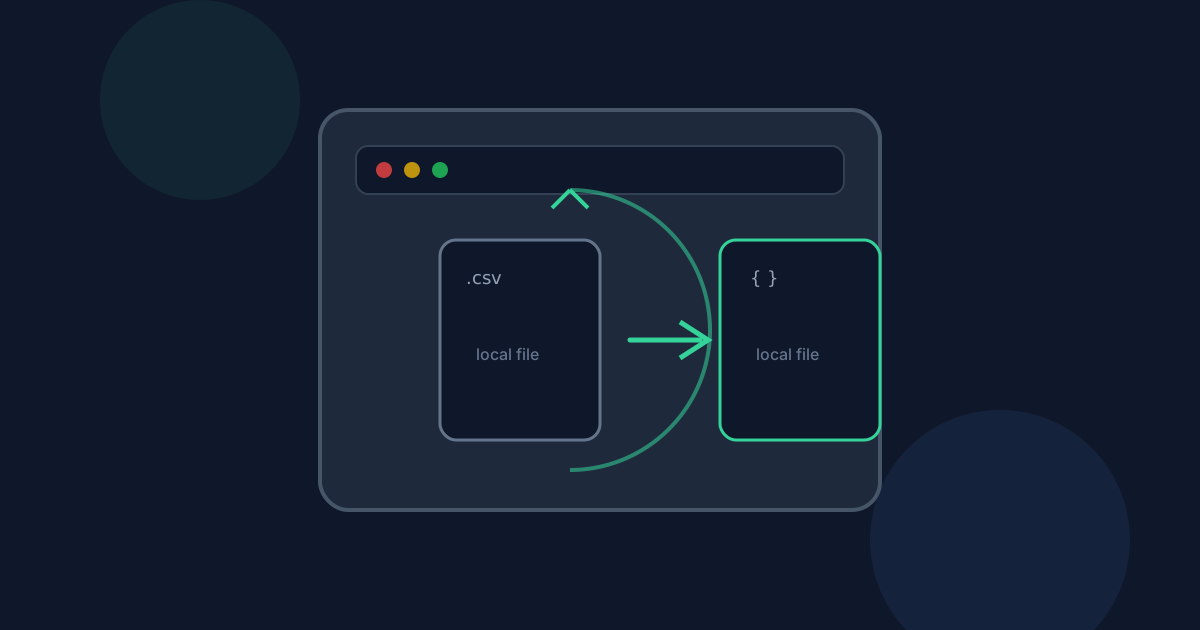
Many online CSV-to-JSON converters ask you to upload the file to a remote server. Looty Tools CSV to JSON is built for local conversion: CSV stays in the browser while parsing and JSON generation both happen on your device. This guide explains what that means in practice, for both uploaded files and pasted text.
Ready to try the tool this guide describes?
What “without uploading” means here
When you choose a .csv file or paste CSV text, the browser reads or holds the content in memory. Parsing and JSON generation run client-side with no SheetJS or other spreadsheet round-trip, and the download is a local Blob. There is no Looty Tools conversion endpoint that receives your CSV contents for this workflow.
Your CSV is processed locally in your browser and is not uploaded to our servers, whether you choose a file or paste text.
What can still leave the device
Page assets, analytics, and account requests can still use the network as on any website. Successful-use analytics may record that the tool was used after a successful download. They do not include filenames, pasted text, or CSV contents.
If you later email, sync, or upload the downloaded .json file, that step is outside this conversion path.
How local conversion compares to upload services
Upload-based converters send the full CSV payload to a remote worker, which can be convenient for very large server-side jobs but expands the trust boundary — your data leaves the device before it comes back as JSON. Browser-only conversion keeps the CSV on-device and is limited by browser memory instead.
- Local: CSV content stays in the browser during parsing and JSON generation.
- Upload services: the provider receives and temporarily stores the CSV payload.
- Very large or very wide CSV files may still strain a low-memory device even when privacy is preferred.
How to convert privately on Looty Tools
- Open /tools/csv-to-json on a modern browser.
- Choose a .csv file locally, or paste CSV text directly into the tool.
- Review the delimiter and table preview on your device.
- Download the .json file from the browser.
CSV to JSON Without Uploading FAQ
- Is CSV uploaded to Looty Tools for conversion?
- No. Parsing and JSON generation run in your browser for both file uploads and pasted text. There is no conversion endpoint that receives your CSV contents for this workflow.
- Does pasting CSV behave differently from uploading a file, privacy-wise?
- No. Both input methods are processed the same way, entirely in the browser. Pasted text is never sent anywhere to be parsed.
- Does usage tracking include my CSV contents?
- Successful-use analytics may record that the tool was used after a successful download. They do not include filenames, pasted text, or CSV contents.
- Can I use the tool offline after the page loads?
- The tool’s scripts must load in the browser first. Once the page is available, parsing and JSON generation run locally without needing the network for the conversion itself.
- Where can I learn the CSV to JSON conversion workflow?
- See /guides/how-to-convert-csv-to-json for the step-by-step workflow and /guides/csv-headers-and-data-types-to-json for how the output is structured.
Related guides
- How to Convert CSV to JSONConvert a .csv file or pasted CSV into formatted JSON locally: choose the delimiter and header handling, review the preview, and download without uploading.
- CSV Headers and Data Types to JSONUnderstand how blank and duplicate CSV headers, ragged rows, and the string-only value policy shape the JSON objects or arrays this tool produces.
- Browser-Based File PrivacyUnderstand local browser processing, when files stay on your device, practical privacy checks, and how Looty Tools discloses different processing models.