Work, pay & shifts
Why Semi-Monthly Pay Periods Vary in Length
On a semi-monthly schedule the paychecks come on fixed dates, but the pay periods behind them aren’t all the same size. For a salaried employee that rarely shows — each check is still one twenty-fourth of the year. For anyone paid by the hour, or anyone reconciling timesheets, it changes how much work each check covers.
Ready to try the tool this guide describes?
Calendar days per period
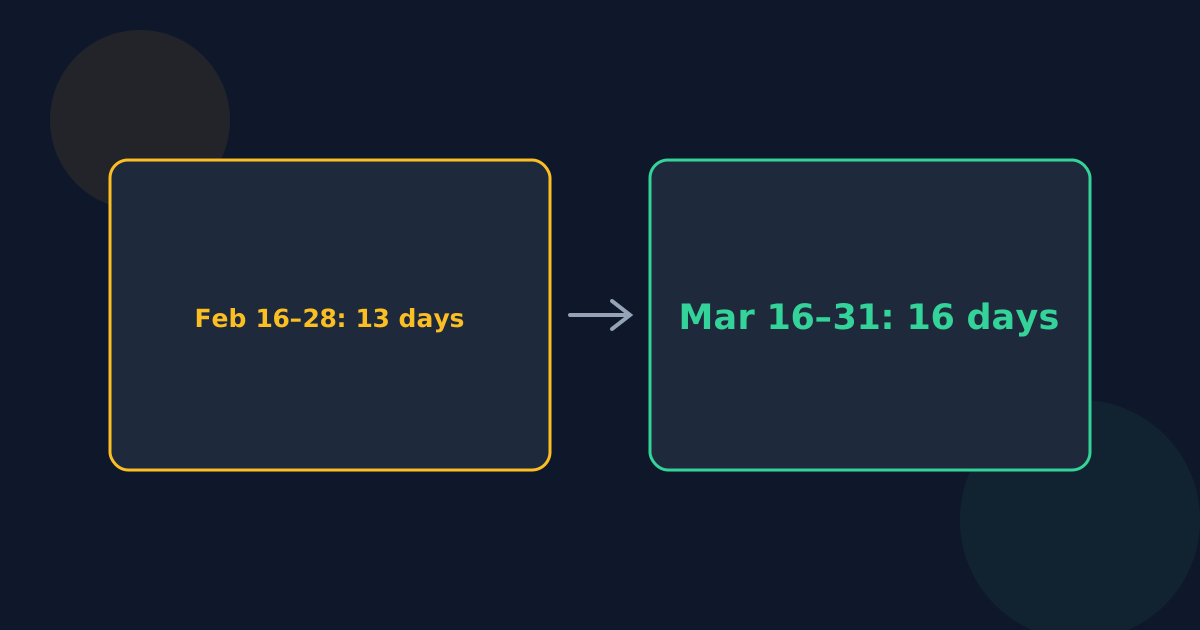
With the common split of the 1st to the 15th and the 16th to the month’s end, the first half is always 15 days. The second half is whatever is left of the month: 16 days in a 31-day month, 15 in a 30-day month, 13 in February, and 14 in a leap-year February.
Weekdays per period
Working days vary even more, because the number of Mondays to Fridays in each half depends on where the weekends fall. In 2027:
| Period | Calendar days | Weekdays |
|---|---|---|
| February 16–28, 2027 | 13 | 9 |
| May 1–15, 2027 | 15 | 10 |
| January 1–15, 2027 | 15 | 11 |
| March 16–31, 2027 | 16 | 12 |
What it means for hourly pay
At 8 hours a weekday, the 9-weekday period holds 72 hours and the 12-weekday period 96 — a third more. Over the year it evens out to an average of 86.67 hours a period for a 40-hour week (2,080 ÷ 24), but no single period is the average.
What it means for salaried pay
A salary is usually split into 24 equal checks, so the period length doesn’t change the amount. It starts to matter when a salary is prorated for part of a period — joining or leaving mid-period, or unpaid days — because the answer depends on whether the period is counted in calendar days or working days.
Semi-Monthly Period Length FAQ
- How long is a semi-monthly pay period?
- 13 to 16 days. The 1st to the 15th is always 15 days; the second half runs from the 16th to the end of the month.
- How many hours are in a semi-monthly pay period?
- For a 40-hour week, 86.67 on average (2,080 ÷ 24), but one period can hold anywhere from 9 to 12 weekdays — 72 to 96 hours at 8 a day.
- Why is my hourly paycheck smaller in late February?
- The February 16 to 28 period has only 13 calendar days, and in 2027 only 9 weekdays — the fewest of any period that year.
- Do biweekly pay periods vary like this?
- No. A biweekly period is always 14 days and 10 weekdays.
- Can an employer split the month differently?
- Yes. Some use other cutoffs, such as the 11th to the 25th; the lengths still vary, because months do.
Related guides
- Semi-Monthly PaydaysThe common semi-monthly schedules, where the end-of-month payday lands in short months, and why the payday weekday changes every month.
- Weekend Semi-Monthly PaydaysHow often semi-monthly paydays land on a Saturday or Sunday, the common ways employers move them, and the edge cases those moves create.
Open the tool
Jump into Semi-Monthly Paycheck Date Calculator when you are ready to process your files.