Work, pay & shifts
How Semi-Monthly Paydays Work
Semi-monthly pay — twice a month, on fixed dates — is common for salaried jobs because each paycheck is the same share of the year: one twenty-fourth. The dates are simple in principle, but short months, the end of February, and a weekday that changes every month make the actual pay dates less predictable than they look.
Ready to try the tool this guide describes?
The common schedules
| Schedule | First payday | Second payday | Notes |
|---|---|---|---|
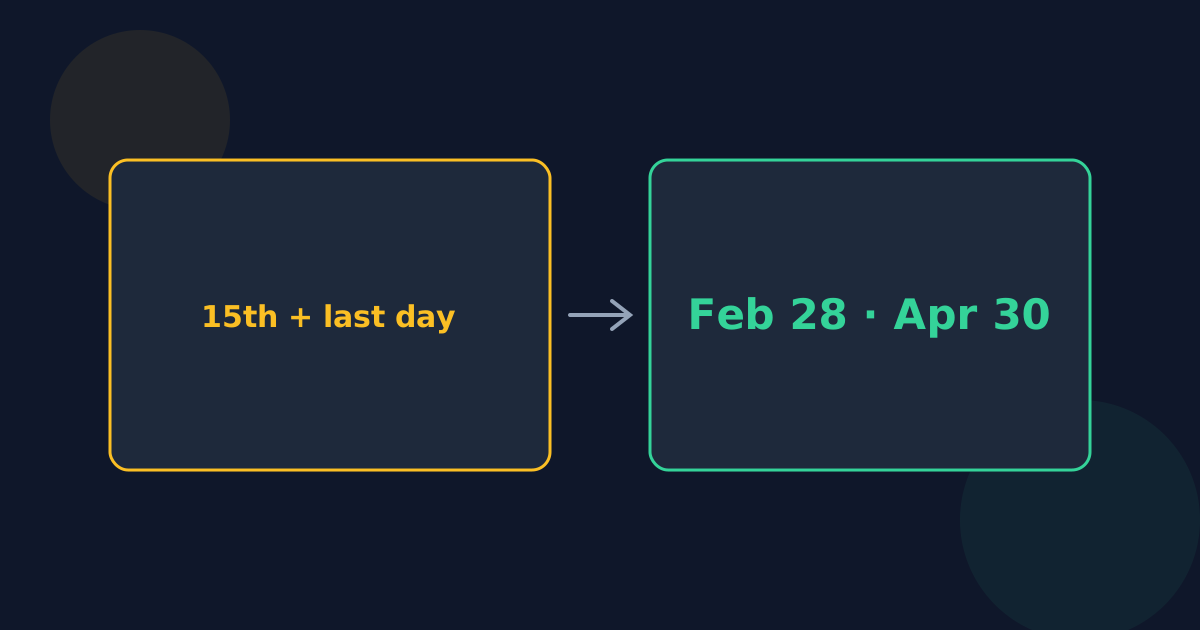
| 15th and last day | 15th | 28th to 31st | The second payday moves with the length of the month |
| 1st and 15th | 1st | 15th | Both dates exist in every month |
| Custom, such as the 10th and 25th | Set by the employer | Set by the employer | Days after the 28th need a rule for short months |
The last day of the month
A last-day payday is the 31st in January, March, May, July, August, October, and December; the 30th in April, June, September, and November; and the 28th in February, or the 29th in a leap year.
Schedules written with a fixed day past the 28th need the same treatment: a payday on the 30th has nowhere to go in February except the last day.
The weekday changes every month
Because the dates are fixed, the weekday isn’t. In 2026 a 15th-and-last-day schedule has 8 paydays on a weekend, from Saturday, January 31 to Sunday, November 15. What happens to those paydays is the employer’s call.
Always 24 paydays
Two paydays a month makes 24 a year, every year — no extra paydays and no three-paycheck months. That predictability is the main practical difference from pay every two weeks, which brings 26, or occasionally 27, smaller checks on a fixed weekday.
Semi-Monthly Paydays FAQ
- Is semi-monthly the same as bimonthly?
- Not reliably. “Bimonthly” is used both for twice a month and for every two months, so payroll documents usually say semi-monthly or twice monthly instead.
- What is the payday when a schedule says the 31st?
- The last day of the month: the 30th in 30-day months and the 28th or 29th in February.
- Why are my semi-monthly paydays on different weekdays?
- Fixed dates fall on a different weekday each month, so a 15th payday can be a Monday one month and a Thursday the next.
- How many semi-monthly paychecks are in a year?
- Always 24.
- Can the two paydays be any dates?
- An employer can choose other days, such as the 10th and 25th. A first payday after the 27th doesn’t work, because in February every date from the 28th on is the same day.
Related guides
- Weekend Semi-Monthly PaydaysHow often semi-monthly paydays land on a Saturday or Sunday, the common ways employers move them, and the edge cases those moves create.
- Semi-Monthly Period LengthSemi-monthly pay periods run 13 to 16 days and hold 9 to 12 weekdays, which changes hourly pay and timesheets from one check to the next.
Open the tool
Jump into Semi-Monthly Paycheck Date Calculator when you are ready to process your files.