Text & writing
When Should Text Be Lowercase?
Some text is conventionally written in lowercase, not because of grammar but because of how computers, platforms, and readers handle it. Web addresses, email addresses, usernames, and file names all have rules — or at least safe habits — about case. This guide covers where lowercase is the sensible default and where case still matters.
Ready to try the tool this guide describes?
Web addresses
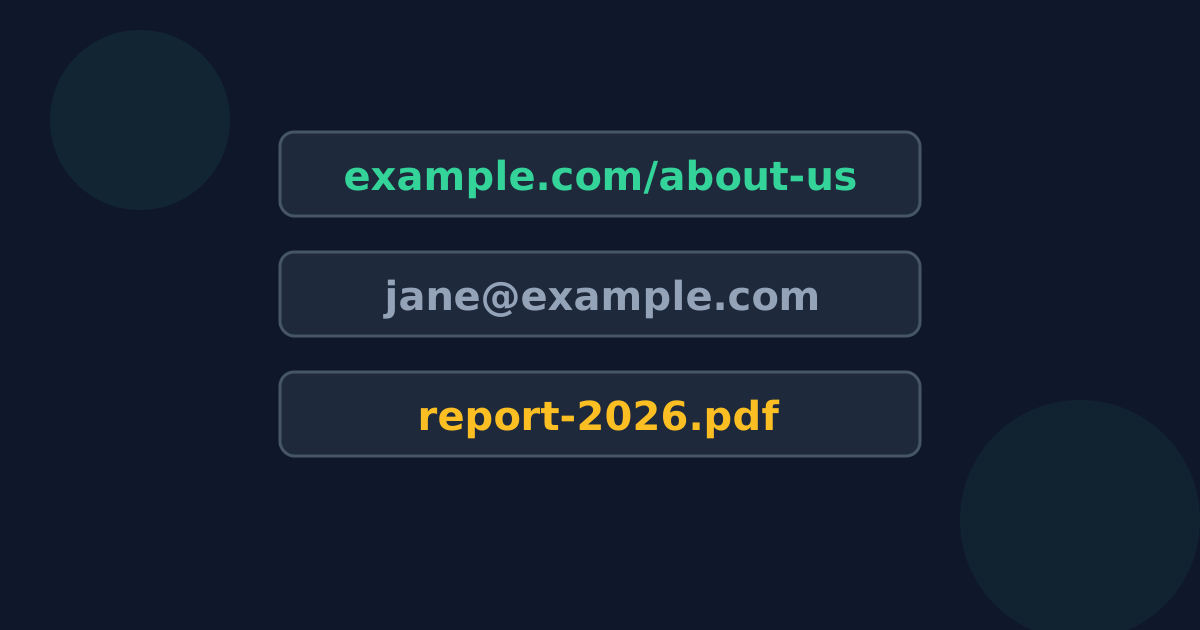
The domain part of a web address — example.com — is not case-sensitive, so EXAMPLE.com reaches the same site. The path after the domain can be case-sensitive, depending on the server, so /About and /about may be different pages.
That is why lowercase is the usual convention for URL slugs: it avoids duplicate addresses that differ only by case and is easier to type and share.
Email addresses
The email standard (RFC 5321) says the domain after the @ is not case-sensitive, but the part before the @ must be treated as case-sensitive — while also discouraging anyone from relying on that. Most mail providers ignore case in practice.
Lowercasing your own address when you type or store it is common and usually harmless; for addresses you do not control, keep the local part exactly as given.
Usernames, tags, and file names
- Usernames and handles: many services treat them case-insensitively, but display them as typed. Lowercase avoids confusion when people type them.
- Hashtags and tags: matching rules depend on the platform. Capitalizing each word in a multi-word hashtag (#ThrowbackThursday) makes it easier for people to read.
- File names: Linux file systems are case-sensitive, so report.pdf and Report.pdf can both exist; macOS and Windows are case-insensitive by default. Lowercase names avoid surprises when files move between systems or onto a web server.
Where lowercase is the wrong choice
- Names of people, places, and organizations in running text.
- The start of sentences in documents meant to be read as normal prose.
- Acronyms and codes whose meaning depends on capitals, such as unit symbols (mW vs. MW).
- Passwords and other case-sensitive secrets — never change their case.
When Text Should Be Lowercase FAQ
- Are URLs case-sensitive?
- The domain is not, but the path after it can be, depending on the website’s server. Lowercase slugs avoid problems.
- Are email addresses case-sensitive?
- The domain is not. RFC 5321 says the part before the @ must be treated as case-sensitive, though most providers ignore case in practice.
- Should file names be lowercase?
- It is a safe habit, especially for files that will go on a web server or a Linux system, where names that differ only by case are different files.
- Should hashtags be written in lowercase?
- Capitalizing each word in a multi-word hashtag makes it easier to read. Whether case affects matching depends on the platform.
- Can lowercasing change the meaning of something?
- Yes. Unit symbols (mW vs. MW), case-sensitive codes, and passwords can all change meaning or stop working.
Related guides
- Lowercase for Comparing TextHow lowercasing helps match and deduplicate text, why case folding handles cases like ß that lowercasing misses, Turkish and Greek pitfalls, and spreadsheet functions.
- Lowercase in Branding and StyleWhy designers and writers choose lowercase for logos, names, and interface text, the tradeoffs, and how to handle stylized lowercase names in your own writing.
Open the tool
Jump into lowercase Converter when you are ready to process your files.