Work, pay & shifts
Billable Utilization vs Productivity
Utilization is easy to measure, so it is tempting to treat it as the measure of how well someone works. It isn’t. It counts how much time was billed, not what that time produced, what it earned, or what the unbilled time was for. This guide explains the difference and what to look at alongside utilization.
Ready to try the tool this guide describes?
What utilization measures — and what it doesn’t
- It measures the share of available hours recorded as billable.
- It doesn’t measure the value delivered, the rate charged, or whether the client paid.
- It doesn’t credit time spent winning work, training, mentoring, or improving how the team works.
- It can be raised by working slower on billable tasks, which is the opposite of productivity.
Two weeks compared
| Person A | Person B | |
|---|---|---|
| Billable hours (of 40) | 36 | 28 |
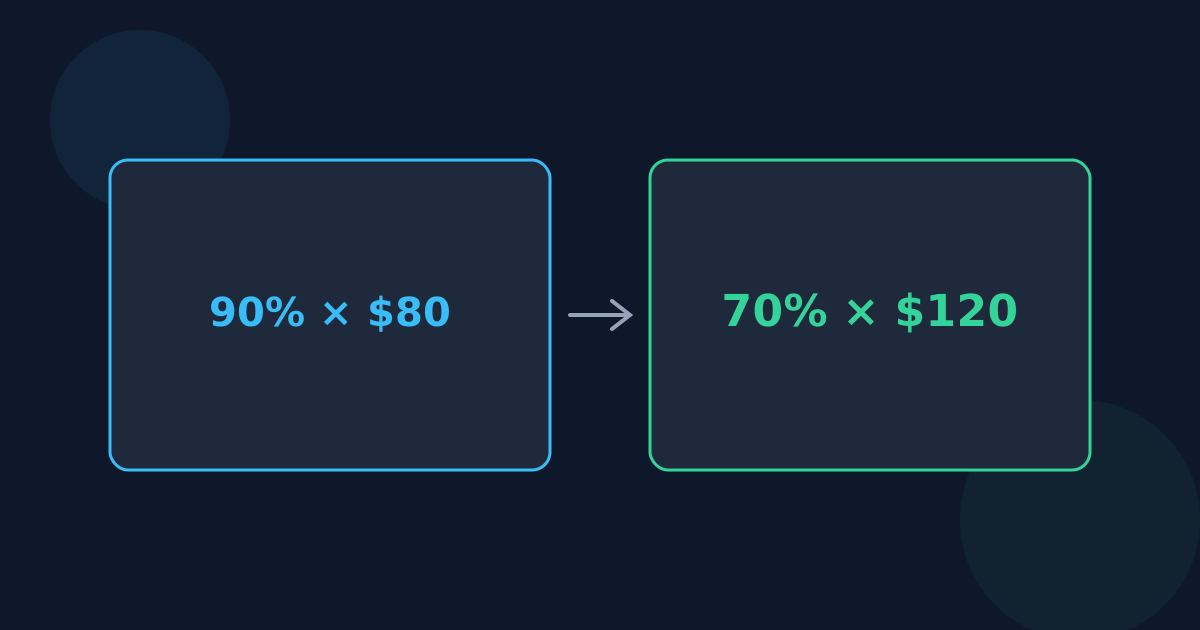
| Utilization | 90% | 70% |
| Rate actually realized | $80/hr | $120/hr |
| Billed value | $2,880.00 | $3,360.00 |
| Other time | 4 h admin | 8 h winning a new client |
Person B has the lower utilization and the higher billed value — and spent the remaining time on work that brings in future revenue.
The cost of running at capacity
When utilization sits near 100% for long, something else gives: training stops, documentation and internal improvements wait, nobody has time to win the next client, and people burn out. Unplanned work — an urgent fix, a sick colleague — has nowhere to go. Many firms deliberately target well below 100% to leave that slack.
Read utilization alongside
- Realized rate: billed value ÷ billable hours.
- Project margin: what a piece of work earned after its cost.
- Collection: how much of what was billed was paid.
- Pipeline: whether nonbillable sales time is producing future billable work.
- Client outcomes and repeat business.
Targets should depend on the role
A sensible target reflects what each role is for. As an illustration, a firm might set 80% for delivery staff, 50% for a team lead who also manages people, and 20% for a partner whose main job is bringing in work. A single target for everyone tends to penalize exactly the people doing the nonbillable work the firm depends on.
Utilization vs Productivity FAQ
- Can billable utilization be too high?
- Yes. Sustained very high utilization leaves no time for training, sales, or recovery, and no slack for surprises.
- Should bonuses be based on utilization?
- Paying on utilization alone rewards recording hours, not results. Firms that use it usually combine it with realization, margin, or client measures.
- How can a team raise utilization without burning out?
- Reduce avoidable nonbillable time — duplicated admin, unclear handoffs, unplanned rework — rather than adding hours.
- Is low utilization always a problem?
- Not if the nonbillable time is going somewhere useful, such as winning work or training. It is a problem when nobody can say where the time went.
- What is realization?
- The share of the standard value of billable hours that is actually billed after discounts and write-offs. High utilization with low realization means many hours billed for less than they were worth.
Related guides
- Utilization RateWhat the billable utilization rate measures, why the choice of available hours changes the answer, and how utilization differs from realization and collected revenue.
- Nonbillable TimeThe common kinds of nonbillable time, the gray areas such as travel and fixing your own mistakes, and a worked week showing where 12 nonbillable hours went.
Open the tool
Jump into Billable Utilization Calculator when you are ready to process your files.