Work, pay & shifts
Billable Utilization Rate Explained
Billable utilization is the share of available working time that is billed to clients. It is the headline capacity number in consultancies, agencies, and professional-services firms, and a planning number for freelancers. The formula is simple; the definitions behind it are not. This guide covers both.
Ready to try the tool this guide describes?
The formula
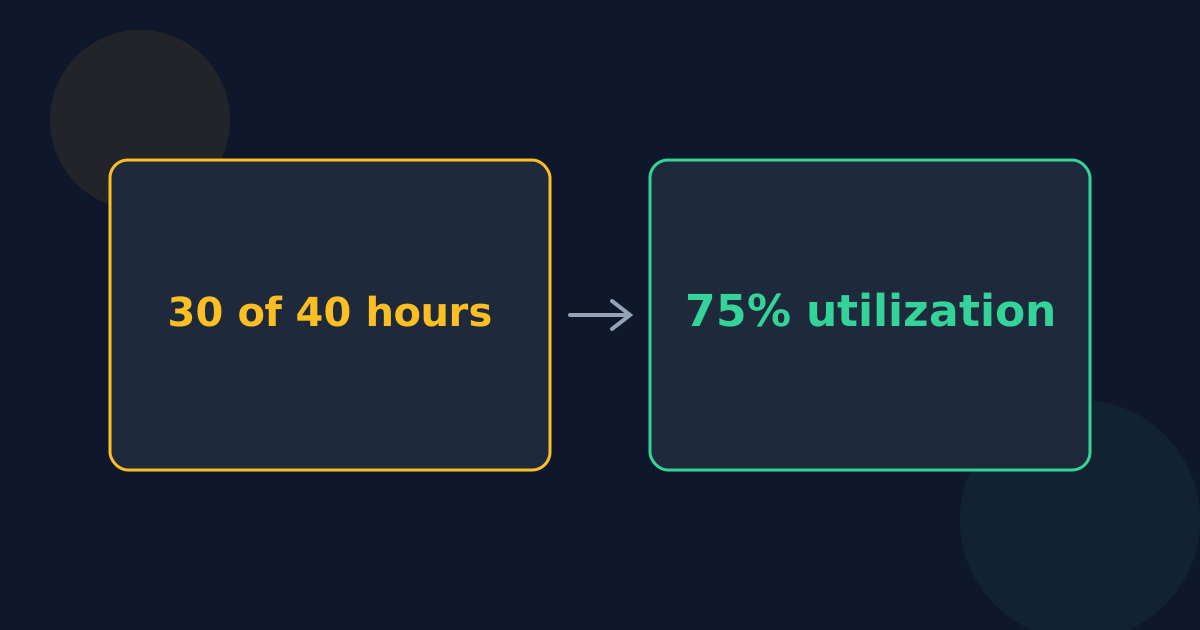
Utilization = billable hours ÷ available hours × 100. 30 billable hours out of 40 available is 75%; the other 25% is nonbillable.
The denominator changes the answer
The same 1,380 billable hours in a year, measured against three common definitions of available hours:
| Available hours | Definition | Utilization |
|---|---|---|
| 2,080 | Standard year: 52 weeks × 40 hours | 66.3462% |
| 1,880 | Standard year less 25 days of holidays and leave | 73.4043% |
| 1,725 | Hours actually recorded | 80% |
None of these is wrong. Comparing utilization between people or firms only works when both use the same definition.
Weekly, monthly, and yearly utilization
Utilization can swing a lot from week to week — a week of training is 0% — so it is usually tracked over a month, quarter, or year. Compute it from the totals for the period rather than averaging weekly percentages, which gives short weeks too much weight.
Utilization, realization, and collection
- Utilization: billable hours ÷ available hours.
- Realization: what was actually billed ÷ what the hours were worth at standard rates, after discounts and write-offs.
- Collection: what clients actually paid ÷ what was billed.
- A team can be highly utilized and still lose money if realization or collection is poor.
Using utilization to plan
Turned around, utilization is a planning tool: if a revenue goal needs 1,500 billable hours and 2,080 are available, the plan needs about 72% utilization. The Billable Hours Target Calculator does that calculation from a revenue target and rate.
Utilization Rate FAQ
- Is “chargeable” the same as “billable”?
- Usually. Both mean time that can be charged to a client. Some firms also count fixed-fee project time as chargeable even though it isn’t billed by the hour.
- Should paid time off count as available hours?
- Most firms leave it out, so a week of vacation doesn’t lower utilization. Some use a fixed standard instead; either works if it is applied consistently.
- Can utilization be over 100%?
- Only if billable hours exceed the available hours you chose, which usually means overtime wasn’t added to available hours. Add the overtime to both and the rate stays at or below 100%.
- How often should utilization be measured?
- Monthly or quarterly is common. Weekly figures swing too much with holidays and training weeks to mean much on their own.
- What is the difference between billable and productive utilization?
- Some firms count time that is unbilled but still client-related — such as fixed-fee project work — as productive. Billable utilization counts only time actually charged by the hour.
Related guides
- Utilization vs ProductivityWhy a high billable utilization rate isn’t the same as productivity: a worked comparison, the costs of running at capacity, and better measures to read alongside utilization.
- Nonbillable TimeThe common kinds of nonbillable time, the gray areas such as travel and fixing your own mistakes, and a worked week showing where 12 nonbillable hours went.
Open the tool
Jump into Billable Utilization Calculator when you are ready to process your files.