Home, moving & space
Turning a Corner by Standing Furniture on End
Movers getting a long sofa round a tight corner usually stand it on end. That works because a hallway corner only cares about an item’s outline seen from above, and standing it up makes that outline far smaller. This guide explains the trade it makes — floor space for ceiling height — when lifting one end helps and when it makes things worse, and how to check it.
Ready to try the tool this guide describes?
The corner sees the footprint
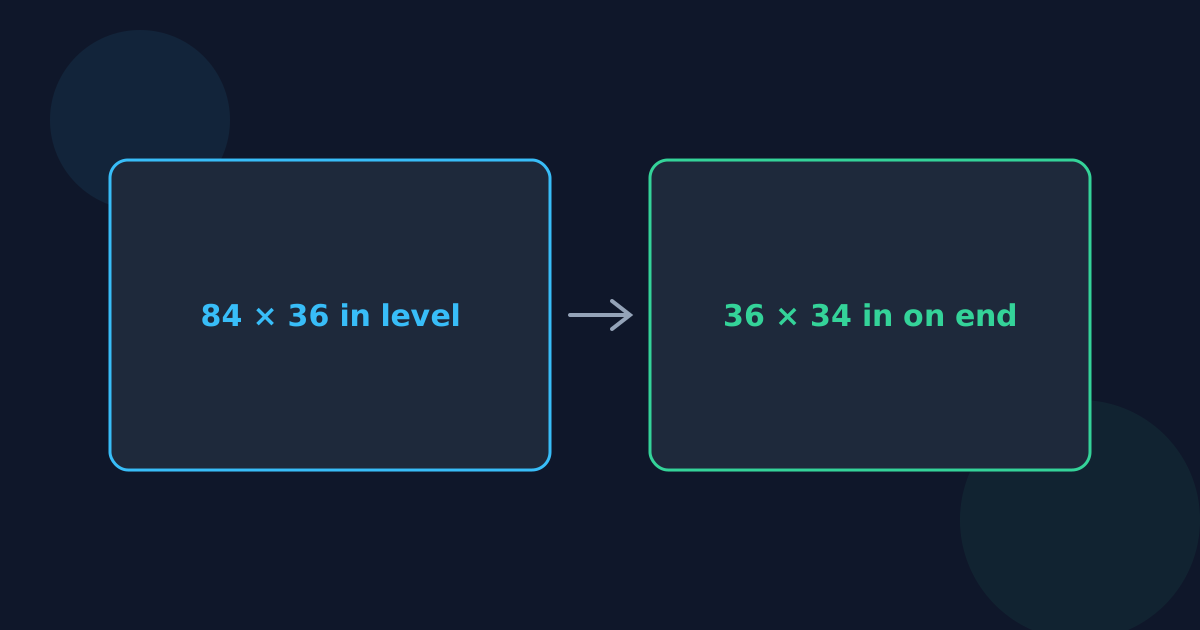
An 84 × 36 × 34 in sofa carried level has an 84 × 36 in footprint, and between two 36 in hallways nothing that wide longer than 36 in can turn. Stood on end, its footprint is 36 × 34 in, which slides through the corner without turning at all. The cost is height: it now needs 84 in of ceiling, and under an 80 in ceiling it can’t stand up there.
| 84 × 36 × 34 in sofa | Footprint from above | Height needed | Two 36 in hallways |
|---|---|---|---|
| Upright, carried level | 84 × 36 in | 34 in | Does not turn |
| On its back, carried level | 84 × 34 in | 36 in | Does not turn |
| Stood on end | 36 × 34 in | 84 in | Turns, with a 96 in ceiling |
Lifting one end only helps steeply
Tilting an item makes it look shorter from above only once the tilt is steep. At first, lifting one end makes the footprint longer, because the raised top edge sticks out past the end. The footprint gets back to its level length at twice atan(height ÷ length) — about 44° for an 84 in-long, 34 in-high sofa — and only shrinks beyond that, while needing more and more headroom.
Held steadily at a steep tilt all the way round, an item behaves like a shorter one. A 72 × 24 × 30 in cabinet carried level is too long for two 36 in hallways (the limit is 53.82 in), but lifted nearly upright its footprint is about 30.6 × 24 in and it turns — needing about 72.3 in of headroom.
Check the ceiling where you stand it up
- Measure the lowest point near the corner: light fittings, smoke alarms, beams, and door heads.
- Remember the item has to be tipped up and down again, which sweeps more height than standing still.
- Items that mustn’t go on end — glass cabinets, aquariums, some appliances — have to turn level, so the corner limit applies as it is.
When it still won’t go
Movers sometimes change the tilt during the turn, lifting as the item swings. That can get past a corner a fixed tilt can’t, but it depends on the exact space and can’t be checked from a few numbers. If only that might work, measure the corner area carefully, try a cardboard outline, or ask the movers to look before delivery day.
Standing Furniture on End FAQ
- Why do movers stand sofas on end?
- Because a hallway corner is limited by what the sofa covers on the floor, and standing it up shrinks that to its depth and height.
- How much ceiling do I need to stand a sofa on end?
- More than its length — an 84 in sofa needs over 84 in, plus room to tip it up and down.
- Does lifting one end of a dresser help it round a corner?
- Only if lifted steeply: a gentle lift makes its footprint longer, not shorter.
- Can I stand any furniture on end?
- Not everything. Glass doors, loose shelves, and some appliances shouldn’t go on end; check before you tip it.
- Is it safe to carry furniture tilted?
- With enough people and a firm grip, yes. Tilted items are heavier at the low end, so put the stronger lifter there.
Related guides
- Hallway Corner Length LimitThe exact limit on how long a rigid item can be and still turn a square hallway corner, with a table for common hallway and furniture widths and what changes it.
- Measuring a HallwayWhat to measure in a hallway before moving furniture round a corner: the narrowest clear widths, the lowest point overhead, the kind of turn, and the obstacles people miss.
Open the tool
Jump into Hallway Corner Turn Calculator when you are ready to process your files.