Work, pay & shifts
Planning Billable Hours Around Time Off
A revenue target doesn’t shrink when you take a holiday; the hours just have to fit into fewer weeks. Planning that in at the start of the year is far easier than discovering in November that the remaining weeks can’t hold the remaining hours. This guide shows how much time off changes the weekly load.
Ready to try the tool this guide describes?
Time off doesn’t shrink the target
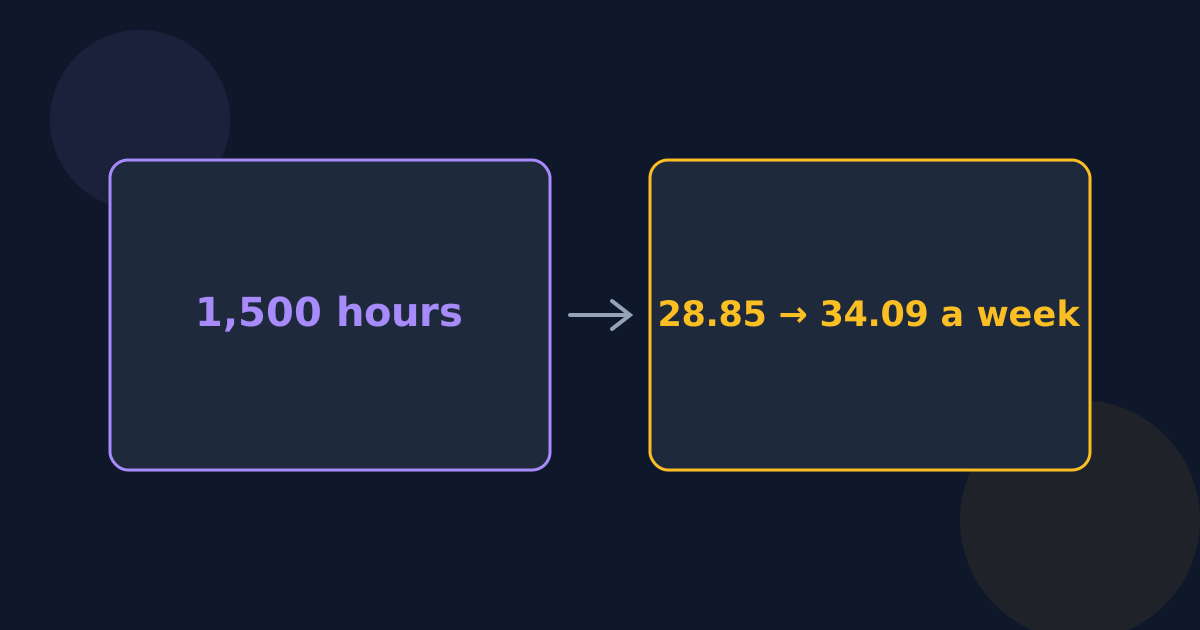
1,500 billable hours, with 40-hour working weeks:
| Weeks off | Working weeks | Billable hours a week | Utilization needed |
|---|---|---|---|
| 0 | 52 | 28.85 hours | 72.1154% |
| 4 | 48 | 31.25 hours | 78.125% |
| 6 | 46 | 32.61 hours | 81.5217% |
| 8 | 44 | 34.09 hours | 85.2273% |
Eight weeks off adds over 5 billable hours to every remaining week.
Paid and unpaid time off
An employee on paid leave is paid but not billing; a freelancer’s time off is unpaid. Either way, the hours can’t be billed, so both come out of the working weeks in a billable-hours plan. The difference shows up elsewhere: the employee’s salary covers the leave, while the freelancer’s rate has to.
What to count as time off
- Public holidays — ten days is two weeks.
- Vacation.
- An allowance for sickness, even if you rarely use it.
- Training, conferences, and other planned nonbillable weeks.
- For freelancers, likely gaps between projects.
Uneven years
Hours rarely arrive evenly. If most time off falls in one part of the year, the busy months need more than the average — plan by quarter as well as by year, and track booked hours against each quarter’s share of the target.
Billable Hours and Time Off FAQ
- How many working weeks should I plan for?
- Count back from 52: holidays, vacation, a sickness allowance, and any expected gaps. Many self-employed people end up planning between 44 and 48.
- Should sick days be in the plan?
- Yes, as an allowance. Leaving them out means any illness puts the target out of reach.
- Do part-time weeks count?
- Use the average hours you’ll work across the year, or plan the full and part-time periods separately and add the hours.
- Should public holidays count as time off?
- Yes. Even if clients don’t expect work on those days, they are days you can’t bill.
- How do I plan if I don’t know my time off yet?
- Use last year’s total, or a round allowance such as six weeks, and adjust each quarter as dates are booked.
Related guides
- Billable Hours NeededTurn a revenue goal into billable hours: the formula, a rate-by-rate table for a $120,000 target, what to do when the hours don’t fit, and how booked work changes the plan.
- Revenue vs Take-HomeRevenue, income after expenses, and take-home pay are three different numbers. Follow $150,000 of revenue down to take-home pay, and work back up from the take-home pay you want.
Open the tool
Jump into Billable Hours Target Calculator when you are ready to process your files.