Work, pay & shifts
Pay Period End Date vs Pay Date
A pay stub usually shows two kinds of date: the pay period it covers and the date it was paid. They are rarely the same. Knowing which is which explains why a first paycheck takes longer than expected, why a last paycheck arrives after the last day of work, and why work done in December can be paid in January.
Ready to try the tool this guide describes?
Two different dates
The period end date is the last day of work counted on the check. The pay date is when the money is paid. The gap between them — often a few days to a week — is the time payroll needs to collect hours, approve them, and process the payment.
Paid in arrears or paid current
- Paid in arrears: the check pays for a period that has already ended. Hourly payroll almost always works this way, because the hours aren’t known until the period is over.
- Paid current: some salaried payrolls pay for the period the pay date falls in, sometimes a day or two before it ends, because the salary is known in advance.
- A payroll can mix the two — for example salary paid current, with overtime paid in arrears on the next check.
The first and last paycheck
Because of the lag, a new employee often waits longer than one full period for a first check: the first period has to end, and then the processing gap passes. At the other end, a final check usually arrives after the last day of work, on the next regular pay date unless the rules where you work require it sooner.
Work in December, paid in January
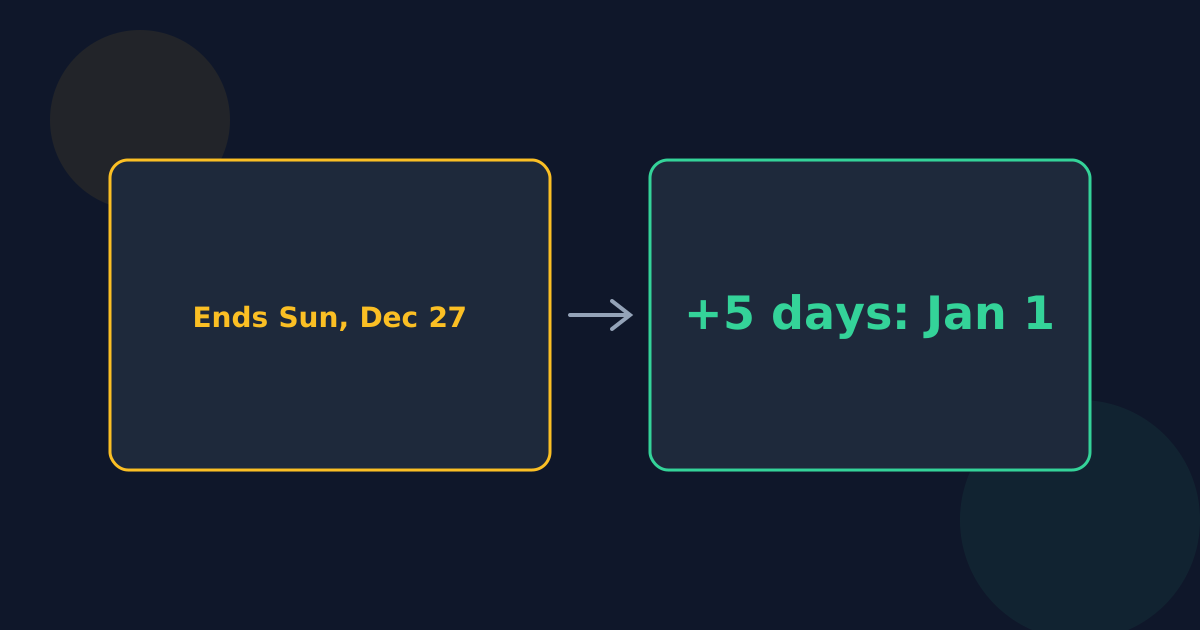
A period that ends late in December can be paid in January. With a five-day lag, a biweekly period from December 14 to December 27, 2026 is paid on January 1, 2027. In the US, wages are generally reported for the year they are paid, so that check normally counts toward 2027 even though the work was done in 2026.
Period End vs Pay Date FAQ
- Which date is my pay date?
- The date the check or deposit is issued, shown on the pay stub as the pay date or check date.
- How long is the gap between the period end and payday?
- The employer sets it. A few days to a week is common, and rules where you work may set a maximum.
- Why is my first paycheck so late?
- The first period has to finish before it is paid, and then the processing gap adds a few more days.
- Is the pay date or the pay period used for the tax year?
- In the US, wages generally count in the year they are paid, so the pay date decides. Other countries have their own rules.
- What does “paid in arrears” mean on a pay stub?
- The check pays for a period that has already ended — the usual setup for hourly pay.
Related guides
- Pay Period CalendarSet up a payroll calendar: choose the frequency, anchor the first period, set the pay date and deadlines, and check year-end and holiday dates.
- Pay Frequencies ComparedPeriods a year, period length, average hours per period, and payday patterns for the four common pay frequencies, side by side.
Open the tool
Jump into Pay Period Date Generator when you are ready to process your files.