Work, pay & shifts
How to Create a Pay Period Calendar
A pay period calendar is the list a payroll runs on: every period’s start and end date, the date each one is paid, and the deadlines in between. Small employers, new managers, and anyone running payroll by hand usually build one a year at a time. This guide walks through the decisions that go into it, in the order they have to be made.
Ready to try the tool this guide describes?
Step 1: choose the frequency
Weekly and biweekly periods have a fixed length and line up with the work week; semi-monthly and monthly periods line up with calendar months. Rules where you work can limit which frequencies are allowed for some employees, so check them before choosing.
Step 2: anchor the first period
Weekly and biweekly calendars need a start weekday — often a Monday or a Sunday — and one real start date; every later period follows from it. Semi-monthly periods usually run from the 1st to the 15th and the 16th to the month’s end. Monthly periods can follow calendar months or start on another day of each month.
Step 3: set the pay date
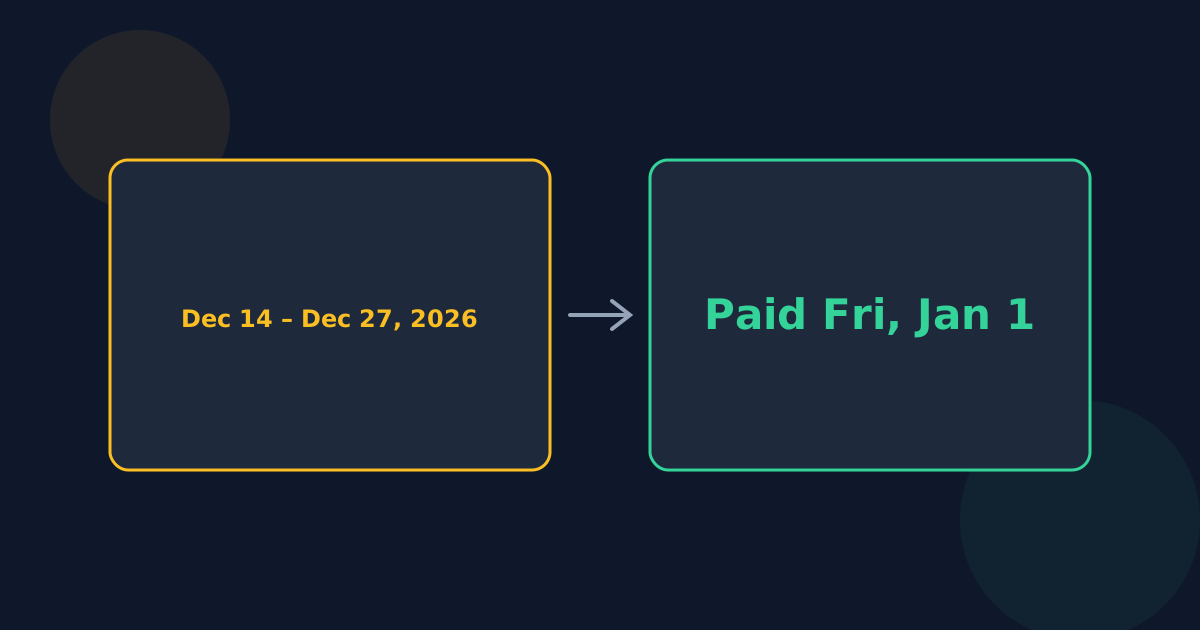
Most payrolls pay a few days after a period closes, leaving time to collect hours and run the payroll. A biweekly calendar with Monday-to-Sunday periods and a Friday payday, starting December 14, 2026:
| Period | Start | End | Payday |
|---|---|---|---|
| 1 | Mon, Dec 14, 2026 | Sun, Dec 27, 2026 | Fri, Jan 1, 2027 |
| 2 | Mon, Dec 28, 2026 | Sun, Jan 10, 2027 | Fri, Jan 15, 2027 |
| 3 | Mon, Jan 11, 2027 | Sun, Jan 24, 2027 | Fri, Jan 29, 2027 |
Step 4: add deadlines and check holidays
- A timesheet cutoff — when hours for the period must be in.
- Approval and processing deadlines — when payroll has to run for the money to arrive on payday.
- Paydays on holidays, like the January 1, 2027 payday above, need a decision: pay early, or pay late.
- Periods that cross December 31 — check which year each payday belongs to.
Pay Period Calendar FAQ
- What day should a pay period start?
- Any day works. Many employers start periods on a Sunday or Monday so each one covers whole work weeks.
- How far ahead should a pay calendar go?
- A full year is typical, so every payday and deadline is known in advance; running it a little past December 31 shows how the year-end periods fall.
- Should the payday be the last day of the period?
- It can be, but most payrolls pay several days later so the final hours can be collected and checked.
- What happens when the pay frequency changes?
- The calendar needs a transition — often one shorter or longer period — to move from the old schedule to the new one. Plan it with whoever runs your payroll.
- Can I build the calendar in a spreadsheet?
- Yes. The Pay Period Date Generator copies its table as tab-separated rows, which paste straight into spreadsheet columns.
Related guides
- Period End vs Pay DateWhy paychecks arrive after the work they cover: the gap between a pay period’s end and its pay date, paying in arrears, and year-end effects.
- Pay Frequencies ComparedPeriods a year, period length, average hours per period, and payday patterns for the four common pay frequencies, side by side.
Open the tool
Jump into Pay Period Date Generator when you are ready to process your files.