Calculators & everyday math
Leap Years and Day Counts: What Changes
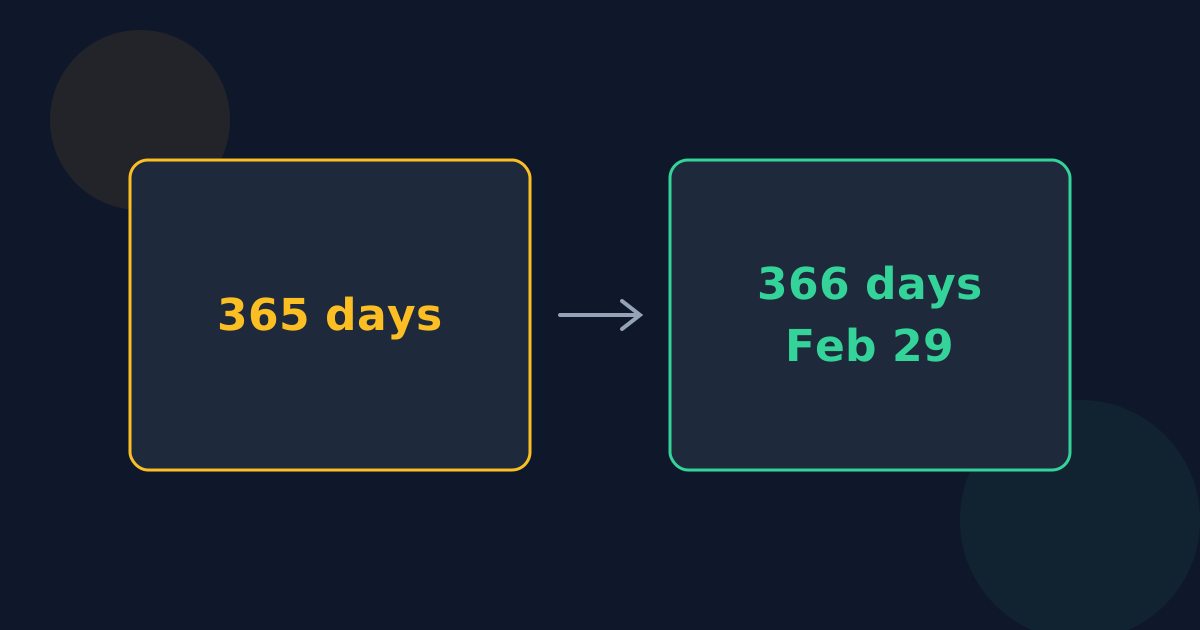
Leap years add a February 29 to the calendar about every four years, and that single day changes year lengths, day-of-year numbers, and any day count that crosses it. This guide covers the rule and its effect on date calculations.
Ready to try the tool this guide describes?
The leap year rule
- A year divisible by 4 is a leap year,
- except a year divisible by 100, which is not,
- except a year divisible by 400, which is.
- So 2024 and 2028 are leap years, 2100 is not, and 2000 was.
How it changes day counts
| Span | Days |
|---|---|
| January 1, 2025 → January 1, 2026 | 365 |
| January 1, 2024 → January 1, 2025 | 366 |
| February 1, 2024 → March 1, 2024 | 29 |
| February 1, 2026 → March 1, 2026 | 28 |
| January 1, 2001 → January 1, 2101 | 36,524 |
365 days later isn’t always the same date
When a span includes a February 29, adding 365 days lands one day short of the same date next year: 365 days after March 1, 2023 is February 29, 2024, not March 1.
The average year
Over the 400-year cycle there are 97 leap years, so the average year is 365.2425 days. The average is useful for estimates, but exact calculations should count actual calendar days.
Leap Years and Day Counts FAQ
- Is 2100 a leap year?
- No. It is divisible by 100 but not by 400.
- How many days are in a leap year?
- 366.
- Does a leap year change the number of days between two dates?
- Only if a February 29 falls between them.
- How many leap years are there in 400 years?
- 97.
- Why was 2000 a leap year?
- It is divisible by 400, which overrides the rule that skips century years.
Related guides
- Count Days Between DatesCount days between dates by hand, with day-of-year numbers, or in a spreadsheet, with checks for month ends, year boundaries, and leap days.
- Leap-Day BirthdaysWhen someone born on February 29 turns a year older in other years, the February 28 and March 1 conventions, and how often a leap-day birthday comes around.
Open the tool
Jump into Days Between Dates Calculator when you are ready to process your files.