Work, pay & shifts
Is Unused PTO Paid Out When You Leave a Job?
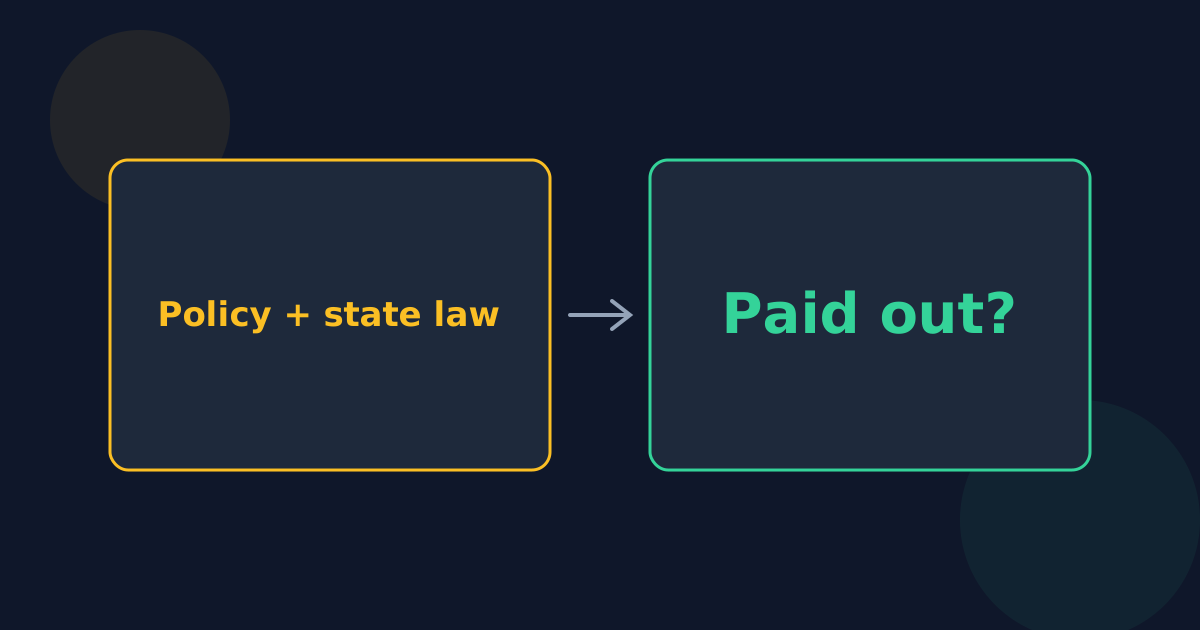
Whether your unused PTO turns into a final payment depends on two things: the law where you work and your employer’s written policy. There is no single national rule in the United States. This guide explains how the two interact and what to ask before you give notice. It is general information, not legal advice.
Ready to try the tool this guide describes?
No federal requirement
The federal Fair Labor Standards Act doesn’t require employers to offer paid vacation, so it doesn’t require unused vacation to be paid out either. The answer comes from state law and the employer’s policy.
States that treat earned vacation as wages
A few states treat earned, unused vacation as wages that must be paid at separation. California is the best-known example; Colorado and Massachusetts also require payout of earned vacation. In California, a combined PTO bank is generally treated the same way as vacation. Rules change, and details differ, so check your state labor department’s guidance.
When the policy decides
- In many states, a written policy can say unused PTO is not paid out, or is paid only if you give notice.
- Some policies pay a share of the balance, or up to a maximum number of hours.
- Sick leave is often excluded from payout even where vacation is paid.
- If the policy is silent, past practice and state rules can matter — ask HR in writing.
Questions to ask before you resign
- Is unused PTO paid out, and is it vacation, sick leave, or a combined bank?
- Does the payout depend on notice, length of service, or the reason for leaving?
- Is there a share or a maximum on what is paid?
- Which hourly rate is used, and when is it paid?
Estimating what is at stake
With 80 unused hours at $25 an hour, full payout is worth $2,000 gross. A policy that pays half is worth $1,000. Knowing the number can help you decide when to give notice — or whether to use some time before you go, if your employer allows it.
Unused PTO When You Leave FAQ
- Does my employer have to pay out my vacation time?
- In some states, yes; in many others, only if the employer’s policy says so. There is no federal requirement.
- Is sick leave paid out when you quit?
- Usually not. Many state sick-leave laws don’t require payout, and most policies exclude it unless sick time is part of a combined PTO bank.
- Can my employer refuse a payout if I was fired?
- In states that treat earned vacation as wages, the reason for leaving generally doesn’t change what is owed. Elsewhere, the written policy decides.
- When will I get my PTO payout?
- Often with the final paycheck. States set different deadlines for final pay, sometimes depending on whether you quit or were let go.
- Can I use my PTO during my notice period instead?
- Only with your employer’s approval. Some policies don’t allow PTO during the notice period, or require you to work the full notice to receive a payout.
Related guides
- Calculating a PTO PayoutThe PTO payout formula with day-to-hour and salary-to-hourly conversions, partial-payout policies, maximums, and which hourly rate is used.
- PTO Payout Gross vs NetWhy a PTO payout deposit is smaller than the gross: supplemental wage withholding, Social Security and Medicare, state tax, and a worked $2,000 example.
Open the tool
Jump into PTO Payout Calculator when you are ready to process your files.