Home, moving & space
How Stair Steepness Changes Furniture Clearance
Two staircases with the same width and the same measured headroom can behave very differently on moving day, because one is steeper. Steepness takes room away twice: it reduces the headroom an item can use along the flight, and it changes how sharply the item has to bend at the foot and head of the stairs. This guide puts numbers on both effects.
Ready to try the tool this guide describes?
Steeper stairs, less usable headroom
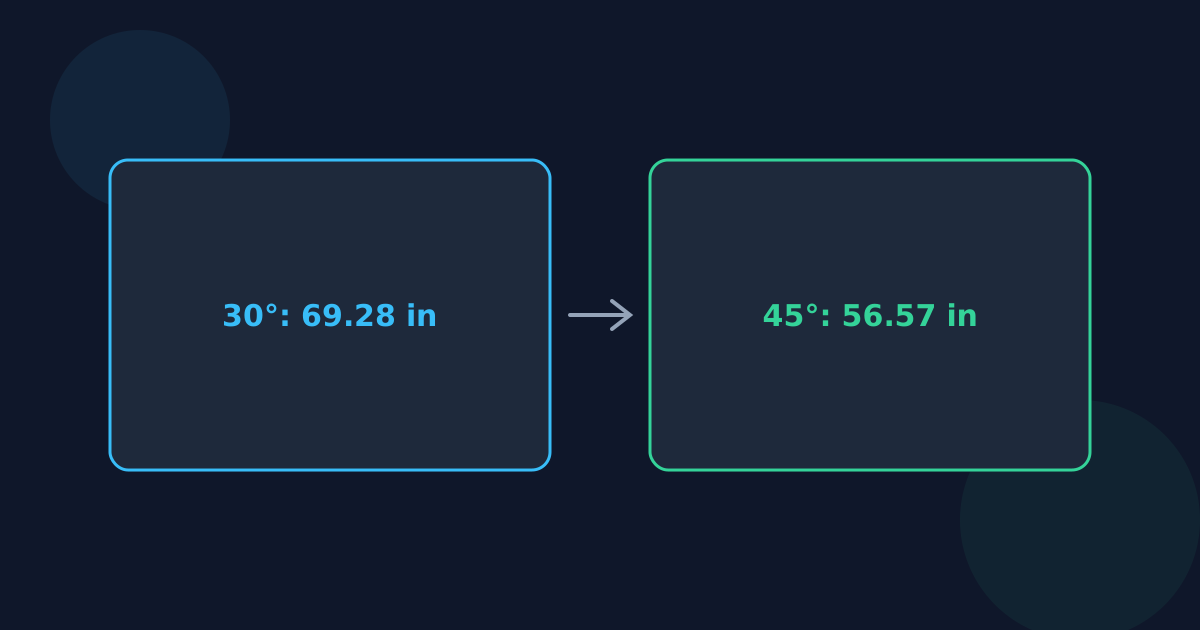
Headroom is measured straight up, but an item on the stairs lies along the slope and gets headroom × cos(pitch). With 80 in measured, a 30° staircase leaves 69.28 in square to the slope; a 45° one leaves 56.57 in. On steep stairs, a tall item carried on edge can lose its clearance without the measured headroom changing at all.
| Pitch | Usable headroom (80 in measured) | Longest 20 in-thick item that can bend onto the stairs under a 30 in gap |
|---|---|---|
| 30° | 69.28 in | 206.57 in |
| 35° | 65.53 in | 170.49 in |
| 40° | 61.28 in | 142.43 in |
| 45° | 56.57 in | 119.66 in |
The last column is the bend from a level passage into the flight, for a rigid item 20 in thick at right angles to the slope.
The bend at the foot and head
At the bottom of the stairs a long item has to change from level to the stair’s angle; at the top it changes back. It is the same geometry as turning a hallway corner, turned on its side: the ceiling height before the stairs and the usable headroom over them are the two “hallway widths”, and the pitch is the angle of the turn. A gentle staircase is a shallow bend that long items get through easily; a steep one is a sharper bend, and the longest item that fits drops quickly.
Where steepness hurts most
- Basement and attic stairs, which are often steeper than main stairs.
- A low ceiling or bulkhead just before the bottom step, which narrows the level passage into the bend.
- Tall, thick items carried on edge, which need the most headroom square to the slope.
Working with a steep staircase
- Measure rise and run to get the pitch, rather than guessing from how the stairs feel.
- Carry items with their thinnest side at right angles to the slope where possible.
- Check the ceiling just before the bottom step and just after the top one.
- Use more people on steep stairs: the lower end carries most of the weight.
Stair Steepness and Clearance FAQ
- What makes a staircase steep?
- A tall rise and a short run. The pitch is atan(rise ÷ run); 7.5 in risers on 10 in treads make about 36.9°.
- Why does steepness reduce headroom?
- Because an item lies along the slope, and the gap square to the slope is the measured headroom times cos(pitch).
- Are basement stairs harder for furniture?
- Often — they tend to be steeper and narrower, with a low ceiling where they start.
- Does a steeper staircase make the turn at the bottom harder?
- Yes. The item has to bend through a larger angle, so the longest item that can make the bend gets shorter.
- Is it easier to carry furniture up or down steep stairs?
- The geometry is the same either way; the weight distribution isn’t. Going down, the person below takes most of the load and needs a clear view of their feet.
Related guides
- Stair Width and HeadroomMeasure a staircase for moving furniture: usable width at the handrail, rise, run, and headroom, and how to turn measured headroom into the room an item has along the slope.
- Stair Landing TurnsWhy L- and U-shaped landings are harder than hallway corners, the room needed to spin an item on a landing, and the options when the landing is smaller than that.
Open the tool
Jump into Stairwell Furniture Clearance Calculator when you are ready to process your files.