Shipping & packaging
How Padding Changes the Box Size You Need
Padding goes on every side of a product, so it grows the box in all three directions at once. An inch of cushioning sounds small, but it adds two inches to every dimension — and much more than that to the volume.
Ready to try the tool this guide describes?
Twice the padding, every dimension
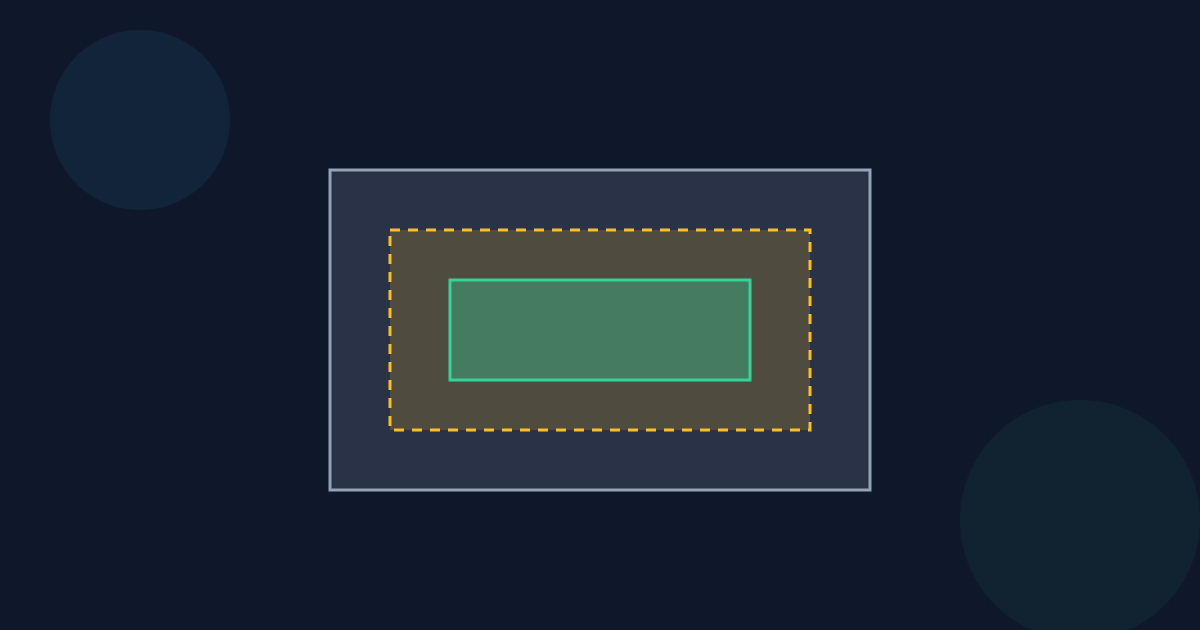
Padding sits on both sides of the product along each axis. The room needed along each axis is the product side plus twice the padding thickness. A 10 × 8 × 6 in product with 1 in of padding all round needs a 12 × 10 × 8 in inside space.
How fast the volume grows
One inch of padding doubles the space this product needs, from 480 to 960 in³, and two inches makes it three and a half times as much.
| Padding on every side | Inside space needed | Inside volume |
|---|---|---|
| None | 10 × 8 × 6 in | 480 in³ |
| 0.5 in | 11 × 9 × 7 in | 693 in³ |
| 1 in | 12 × 10 × 8 in | 960 in³ |
| 2 in | 14 × 12 × 10 in | 1,680 in³ |
Working back from a box
If you already have the box, subtract twice the padding from each inside side to get the largest product it can protect. A 16 × 12 × 10 in box with 1.5 in of padding all round leaves 13 × 9 × 7 in for the product.
Padding is not the same as clearance
- Padding is room you reserve on purpose for cushioning.
- Clearance is whatever room is left over once the product, and its padding, is in.
- A box can fit a padded product exactly, with no clearance left, and still give every side its full padding.
Deciding how much padding
The right thickness depends on how fragile the product is, the cushioning material, and how the package will be handled. Carriers and packaging suppliers publish guidance for their own services and materials; use that for the thickness, then work out the box from it.
Padding and Box Size FAQ
- How much bigger does a box need to be for 1 inch of padding?
- 2 in bigger in every dimension, because the padding goes on both sides. A 10 × 8 × 6 in product needs a 12 × 10 × 8 in inside space.
- Why does padding increase box volume so much?
- It adds to all three dimensions at once, so the volume grows much faster than the thickness. One inch of padding doubles the space a 10 × 8 × 6 in product needs.
- How do I find the biggest product a box can hold with padding?
- Subtract twice the padding from each inside side. A 16 × 12 × 10 in box with 1.5 in of padding holds up to 13 × 9 × 7 in.
- Should the padding be the same on every side?
- Not always. Fragile faces or corners may need more; then add each side’s padding separately along its axis.
- Does cushioning compress in the box?
- Most cushioning compresses under load, which is part of how it protects. Measure the padding as it will sit in the closed box.
Related guides
- Checking Product-to-Box FitA reliable method for checking whether a rectangular product fits inside a box: sort the sides, compare them with the inside size, and pick an orientation.
- Why Volume Isn’t FitWhy a product with less volume than a box can still fail to fit, how the sorted-sides test works instead, and when volume is a useful packing figure.
Open the tool
Jump into Product-to-Box Fit Calculator when you are ready to process your files.