Home, moving & space
How Much Walking Space to Leave Around a Bed
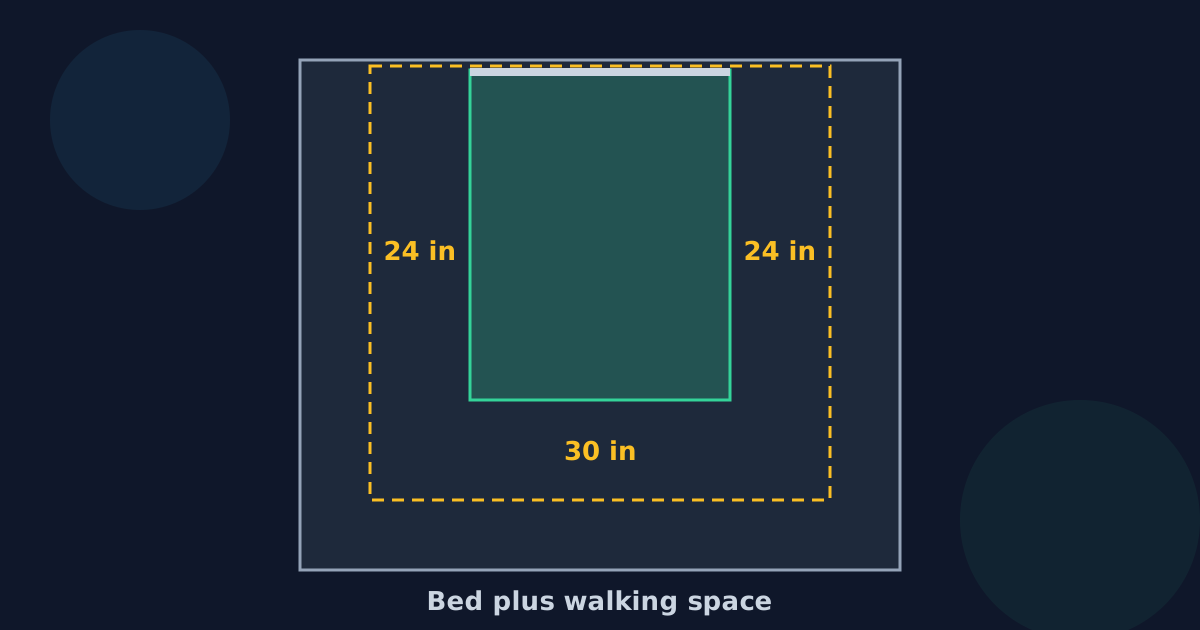
Walking space is what makes a bedroom usable: room to get in and out, make the bed, open drawers, and pass the foot of the bed without turning sideways. It is guidance rather than code, but the common figures are a good way to judge whether a bed is too big for a room.
Ready to try the tool this guide describes?
Common clearances
| Where | Tight | Comfortable |
|---|---|---|
| Side you get in and out of | About 24 in (60 cm) | About 30–36 in (75–90 cm) |
| Side against a wall (guest room) | Less, or none | — |
| Foot of the bed | About 24 in (60 cm) | About 30–36 in (75–90 cm) |
| In front of a dresser | About 36 in (90 cm) | Enough to open drawers and stand back |
Design guidance, not building regulation.
Unequal sides
The two sides don’t have to match. A bed used by one person, or a side by a window, can take less. If you want 36 in on the left and 12 in on the right, the bed needs 48 in of wall beyond its own width, and any extra is best shared equally on top of each: in a 132 in wide room a 62 in queen leaves 22 in spare, so 47 in on the left and 23 in on the right.
What comes out of the walkway
- Nightstands, usually 16–24 in wide, sit in the side clearance near the headboard.
- Door swings: a door opening over the foot of the bed needs its full width clear.
- Closet doors and drawers need their opening depth plus room to stand.
- Radiators, vents, and windows you need to reach.
Measuring what you have
- Measure the wall the headboard goes on and the room’s depth from it.
- Subtract the bed’s width from the wall length; that is all the side space there is.
- Subtract the headboard gap and bed length from the depth; that is the space at the foot.
- Compare with the clearances you want, side by side.
Exactly enough still counts
If the space left equals the clearance you asked for, the bed fits — but there is no slack for a thicker frame or a skirting board. When the figures are that close, measure the actual frame and the room at floor level before buying.
Walking Space Around a Bed FAQ
- How much space should you leave on each side of a bed?
- About 24 in is a common minimum on a side you get in and out of, and 30–36 in feels comfortable.
- How much room do you need at the foot of a bed?
- About 24 in to pass, and 30–36 in if it is a main route to a door, closet, or bathroom.
- Can one side of the bed be against the wall?
- Yes, in a guest room or a child’s room — it frees space for the other side, though making the bed is harder.
- Do nightstands count as walking space?
- No. A nightstand takes part of the side clearance near the headboard, so check the walkway past it.
- How do I split extra space between the two sides of a bed?
- Share the spare wall equally on top of each side’s clearance, so unequal sides keep their difference.
Related guides
- What Size Bed FitsThe floor space twin, full, queen, and king beds need with walking room, how to compare sizes in your room, and when to turn the bed to another wall.
- Measuring a Bedroom for a BedWhat to measure in a bedroom before buying a bed: wall lengths at floor level, doors and windows, the frame’s real size, and the route into the room.
Open the tool
Jump into Bed Size Fit-in-Room Calculator when you are ready to process your files.