Text & writing
UTM and Tracking Parameters in URLs Explained
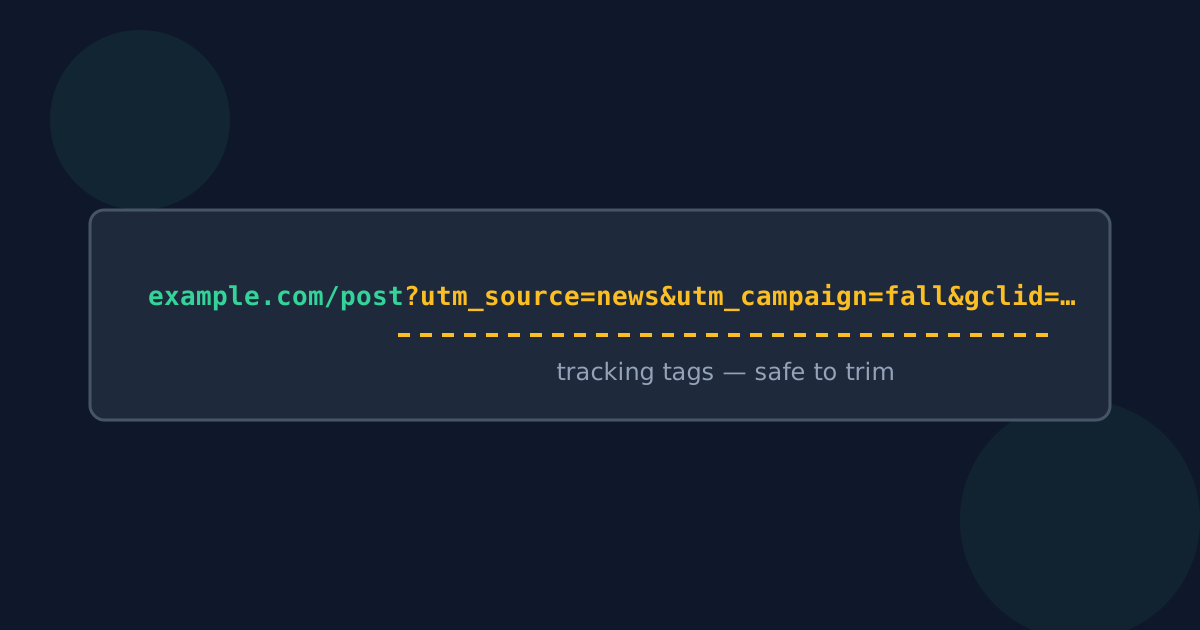
Links shared from newsletters, ads, and social media often carry a tail of parameters such as ?utm_source=newsletter&utm_medium=email. These tell the website where a visitor came from. They are harmless but make links long, and they make the same page look like many different URLs when you collect links.
Ready to try the tool this guide describes?
The standard UTM parameters
| Parameter | Records |
|---|---|
| utm_source | Where the visitor came from, such as newsletter or google |
| utm_medium | The kind of channel, such as email, cpc, or social |
| utm_campaign | The campaign or promotion name |
| utm_term | The paid search keyword |
| utm_content | Which link or ad version was clicked |
Click identifiers
Advertising platforms add their own IDs when a link is clicked: gclid for Google Ads, fbclid for Facebook, and msclkid for Microsoft Advertising are common examples. Each click usually gets a different value, so the same page shared twice can carry two different IDs.
When it is safe to remove parameters
- Removing utm_… and click-ID parameters normally leaves the page exactly the same; only the site’s statistics lose the source.
- Keep parameters that change the page: ?v= in a YouTube link is the video itself, and ?page=2 or ?id=123 select what is shown.
- Keep referral or affiliate codes if the link is meant to credit someone.
If unsure, open the shortened link and compare it with the original before sharing it.
Tracking parameters and duplicate links
When extracting links from text, https://example.com/post?utm_source=newsletter and https://example.com/post?utm_source=twitter are different URLs, so both are listed even though they open the same page. To reduce such a list to unique pages, remove the tracking parameters from each link first and then remove duplicates.
UTM and Tracking Parameters FAQ
- What does utm_source mean in a link?
- It records where the visitor came from — for example a newsletter or a particular website.
- Is it safe to delete UTM parameters from a link?
- Usually yes. The page stays the same; the site simply cannot attribute the visit to that campaign.
- What is fbclid?
- A click identifier Facebook adds to outgoing links so the destination site can connect the visit to the click.
- Which parameters should I never remove?
- Ones that choose the content, such as YouTube’s v= or a page or product ID.
- Why does my extracted link list show the same page several times?
- The links differ in their tracking parameters, so they are different URLs. Remove the parameters, then remove duplicates.
Related guides
- Parts of a URLA URL taken apart piece by piece — scheme, host, port, path, query, and fragment — with which parts are case-sensitive and which never reach the server.
- URLs and Trailing PunctuationWhy full stops, brackets, and quotes get attached to links, how good link detection decides what to trim, and how to write links that survive copying.
Open the tool
Jump into Extract URLs from Text when you are ready to process your files.